What is controlling heavy metal contamination in the Taloka and Wurno aquifers of the Sokoto Basin, and how safe is the groundwater for drinking?
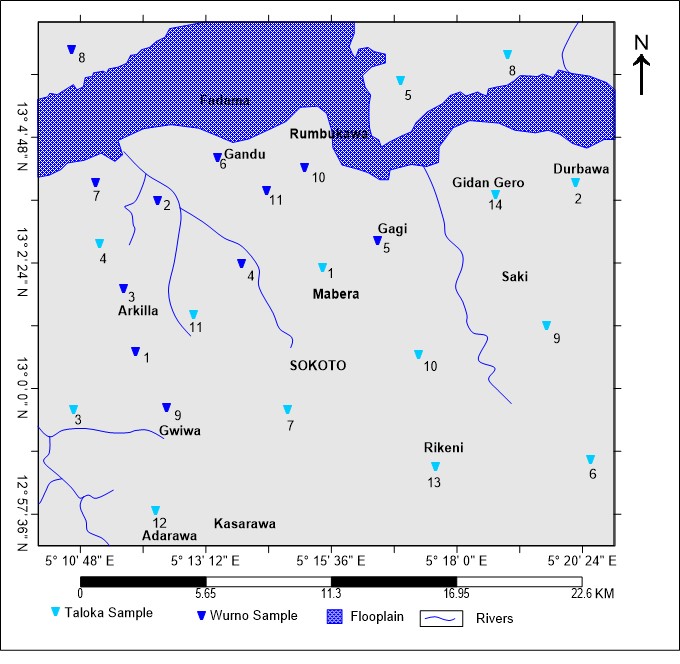
This study assessed heavy metal pollution in the Taloka and Wurno aquifers of the Sokoto Basin, northwestern Nigeria, by integrating field mapping, borehole logging, and groundwater-quality analysis.
The researchers examined how geological conditions and possible surface contamination influence the distribution of metals in groundwater.
The results showed clear differences between the two aquifers. In the Taloka aquifer, elevated iron concentrations were associated with the possible dissolution of iron-rich lithologies within the formation.
In contrast, the Wurno aquifer showed relatively higher concentrations of potentially toxic metals such as lead and arsenic. The study suggests that redox reactions involving organic-rich shales and limestones in the overlying Dange Formation may contribute to this pattern.
The Wurno aquifer was also considered more vulnerable to contamination from the surface because of its shallower stratigraphic position.
Groundwater samples from both aquifers contained arsenic and lead concentrations that exceeded World Health Organization drinking-water limits in a substantial number of cases.
This indicates that contamination is not restricted to a single aquifer and may result from a combination of natural geological processes and human activities.
Supporting results from the wider analysis showed that iron concentrations were generally higher in the Taloka aquifer, while lead and arsenic were relatively higher in the Wurno aquifer.
The study also found that both aquifers fell within the moderate contamination category based on the modified degree of contamination, with average values of 2.32 for Taloka and 2.27 for Wurno.
These findings suggest that the groundwater chemistry of the Taloka aquifer is influenced more strongly by geology and water–rock interaction, while the Wurno aquifer may be affected by both geological sources and surface-derived contamination.
Overall, the study highlights a significant groundwater-quality concern in the Sokoto Basin, particularly because both aquifers are important sources of water in the region.
The authors therefore emphasize the need for continuous groundwater monitoring, targeted water-treatment measures, and sustainable aquifer-management strategies to reduce potential health risks and protect groundwater resources.
📖 Read the full article here:
https://doi.org/10.46481/jnsps.2027.3577
Published in: Journal of the Nigerian Society of Physical Sciences