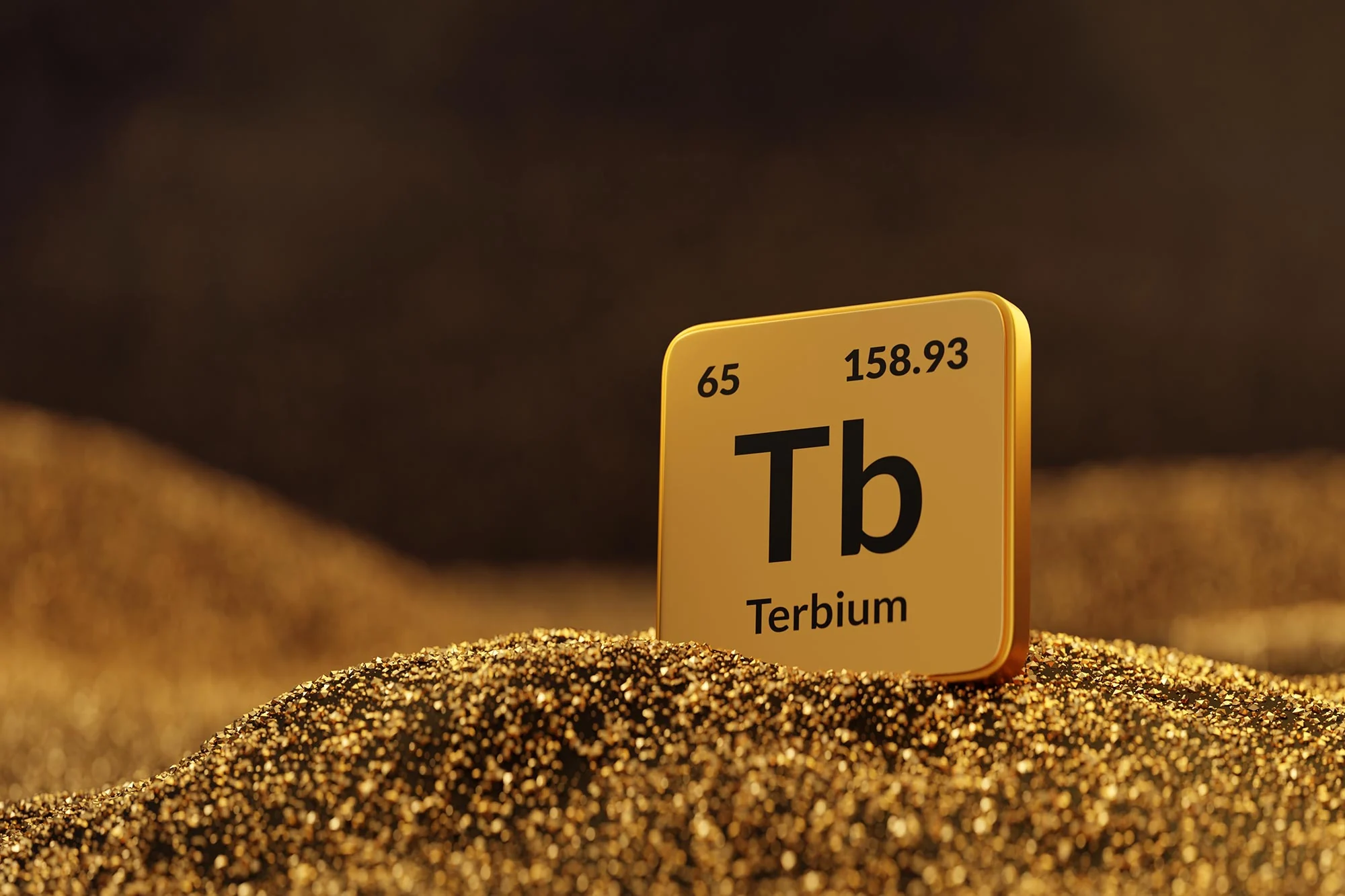
Researchers at the University of Iowa have developed a method for stabilising an unusual oxidation state of terbium, a rare-earth metal widely used in modern electronic and medical technologies. By enclosing the metal within specially designed molecular cages, the scientists successfully converted terbium into its less common +4 oxidation state under ordinary laboratory conditions.
The achievement addresses a longstanding challenge in rare-earth chemistry, where the chemical similarities between elements make them difficult to separate and manipulate. The findings could contribute to more efficient rare-earth separation techniques while providing opportunities to investigate materials for quantum computing and advanced sensing technologies.
The research, led by Korey Carter and Pere Miró of the University of Iowa's Department of Chemistry, was published in Nature Communications on 16 July 2026.
𝐖𝐡𝐲 𝐑𝐚𝐫𝐞-𝐄𝐚𝐫𝐭𝐡 𝐌𝐞𝐭𝐚𝐥𝐬 𝐀𝐫𝐞 𝐃𝐢𝐟𝐟𝐢𝐜𝐮𝐥𝐭 𝐭𝐨 𝐒𝐞𝐩𝐚𝐫𝐚𝐭𝐞
Rare-earth metals are essential components of numerous technologies, including smartphones, high-performance magnets and advanced medical equipment. Despite their importance, separating individual rare-earth elements remains a significant chemical challenge.
One major difficulty is that many of these elements exhibit remarkably similar chemical behaviour. Their tendency to exist in the same oxidation state makes it difficult for chemists to distinguish and separate them using differences in their chemical properties.
Terbium presents a particularly challenging case because it strongly favours the +3 oxidation state, which is also the most common state among lanthanide elements.
An oxidation state describes the formal charge assigned to an atom based on how electrons are distributed in a chemical compound. Changing terbium from +3 to +4 requires the removal of one electron.
Although this transformation is possible, terbium's preference for the +3 state makes the process energetically unfavourable under many conditions.
According to Carter, terbium can be forced to lose or gain an electron, but such changes generally require overcoming an energetic barrier.
While the +3 state has been extensively studied, the chemical behaviour of terbium in other oxidation states remains comparatively less understood.
𝐇𝐨𝐰 𝐌𝐨𝐥𝐞𝐜𝐮𝐥𝐚𝐫 𝐂𝐚𝐠𝐞𝐬 𝐌𝐚𝐝𝐞 𝐭𝐡𝐞 𝐁𝐫𝐞𝐚𝐤𝐭𝐡𝐫𝐨𝐮𝐠𝐡 𝐏𝐨𝐬𝐬𝐢𝐛𝐥𝐞
To overcome terbium's resistance to oxidation, the research team constructed a molecular environment capable of holding the metal in place while its electronic state was altered.
The scientists developed a cage-like structure using polyoxometalates, molecular assemblies composed of tungsten and oxygen. They incorporated additional binding agents known as ligands, which helped create the conditions needed to contain the terbium.
With the metal positioned between these molecular structures, the researchers introduced potassium persulfate, a chemical oxidising agent.
The oxidant removed an electron from terbium, converting it from the +3 oxidation state into the less common +4 state.
The surrounding molecular cage enabled the researchers to stabilise and isolate the resulting form of terbium, allowing them to examine its properties in detail.
The study, titled Structural and spectroscopic characterization of a Tb(IV) polyoxometalate, reports the structural and spectroscopic investigation of this unusual terbium compound.
The result demonstrates how a carefully designed molecular environment can make an otherwise difficult chemical transformation possible.
𝐒𝐭𝐚𝐛𝐢𝐥𝐢𝐬𝐢𝐧𝐠 𝐓𝐞𝐫𝐛𝐢𝐮𝐦 𝐖𝐢𝐭𝐡𝐨𝐮𝐭 𝐒𝐩𝐞𝐜𝐢𝐚𝐥𝐢𝐬𝐞𝐝 𝐋𝐚𝐛𝐨𝐫𝐚𝐭𝐨𝐫𝐲 𝐂𝐨𝐧𝐝𝐢𝐭𝐢𝐨𝐧𝐬
One of the most significant aspects of the discovery is that the researchers achieved the transformation under ambient conditions.
Earlier studies had produced terbium in the +4 oxidation state, but these experiments required carefully controlled environments that excluded air.
Such procedures can complicate the preparation and investigation of unusual rare-earth compounds.
The University of Iowa team demonstrated that terbium could be isolated in its +4 state without specialised controls for temperature, humidity or pressure.
Carter explained that changing the oxidation state of lanthanides is particularly difficult because these elements generally favour similar electronic states.
By developing a molecular cage that supported the conversion of terbium to +4, the researchers established a method that did not depend on the tightly controlled conditions used in earlier experiments.
Carter compared the simplicity of the experimental environment to carrying out a chemistry experiment in an ordinary home setting, emphasising that the team did not require the specialised atmospheric controls previously associated with this chemistry.
The achievement provides a new approach to studying unusual oxidation states of rare-earth elements under more accessible experimental conditions.
𝐖𝐡𝐚𝐭 𝐭𝐡𝐞 𝐃𝐢𝐬𝐜𝐨𝐯𝐞𝐫𝐲 𝐂𝐨𝐮𝐥𝐝 𝐌𝐞𝐚𝐧 𝐟𝐨𝐫 𝐑𝐚𝐫𝐞-𝐄𝐚𝐫𝐭𝐡 𝐒𝐞𝐩𝐚𝐫𝐚𝐭𝐢𝐨𝐧
The ability to alter terbium's oxidation state offers a potential strategy for separating it from other lanthanides.
Because many rare-earth elements have similar chemical properties, separating them is often difficult. Creating a difference in oxidation state provides another way to distinguish one element from others.
The researchers regard their findings as a proof of concept for developing potentially simpler and less expensive approaches to terbium separation.
The method could also provide insights relevant to separating other lanthanide elements.
However, the reported work establishes the feasibility of stabilising an unusual terbium oxidation state rather than demonstrating a complete industrial separation process.
Its importance lies in showing that molecular cage structures can support chemical transformations that are normally difficult to achieve under ordinary environmental conditions.
𝐓𝐞𝐫𝐛𝐢𝐮𝐦'𝐬 𝐑𝐨𝐥𝐞 𝐢𝐧 𝐌𝐨𝐝𝐞𝐫𝐧 𝐓𝐞𝐜𝐡𝐧𝐨𝐥𝐨𝐠𝐲
Terbium is a silvery-grey rare-earth metal known for its magnetic and luminescent properties.
It is mined primarily in China, although deposits are also found in the United States and several other countries.
The metal already plays an important role in a range of technologies, particularly those involving light emission and advanced electronic materials.
Terbium is used in green phosphors, which contribute to light production in televisions, fluorescent lamps and LED displays.
It also has applications in solid-state devices and fuel cells.
In medical imaging, terbium has contributed to improvements in X-ray technology by helping achieve comparable image quality with substantially shorter exposure times.
These established applications demonstrate the technological importance of the metal and the potential value of developing new methods for controlling its chemistry.
𝐏𝐨𝐭𝐞𝐧𝐭𝐢𝐚𝐥 𝐀𝐩𝐩𝐥𝐢𝐜𝐚𝐭𝐢𝐨𝐧𝐬 𝐢𝐧 𝐐𝐮𝐚𝐧𝐭𝐮𝐦 𝐂𝐨𝐦𝐩𝐮𝐭𝐢𝐧𝐠 𝐚𝐧𝐝 𝐀𝐝𝐯𝐚𝐧𝐜𝐞𝐝 𝐒𝐞𝐧𝐬𝐨𝐫𝐬
Beyond rare-earth separation, the discovery could help scientists investigate chemical states that have previously been difficult to access and study.
Unusual oxidation states may offer opportunities to examine properties relevant to quantum technologies, which make use of the behaviour of atoms and their smaller constituents.
The researchers identified quantum computing and advanced sensing as potential areas that could benefit from improved access to these chemical states.
Possible sensing applications include navigation systems, medical imaging and other technologies requiring highly sensitive measurements.
The study does not demonstrate a functioning quantum computer or a new commercial sensor. Instead, it provides a chemical approach that could support future investigations into materials and properties relevant to these applications.
By making the +4 oxidation state of terbium easier to obtain and examine, the research expands the possibilities for studying the metal's less familiar chemical behaviour.
𝐄𝐱𝐭𝐞𝐧𝐝𝐢𝐧𝐠 𝐭𝐡𝐞 𝐑𝐞𝐬𝐞𝐚𝐫𝐜𝐡 𝐭𝐨 𝐑𝐚𝐝𝐢𝐨𝐚𝐜𝐭𝐢𝐯𝐞 𝐄𝐥𝐞𝐦𝐞𝐧𝐭𝐬
Following the successful stabilisation of terbium, Carter's research group plans to investigate whether the approach can be extended to actinides.
Actinides are a group of highly radioactive elements with applications in several specialised technologies.
As described in the University of Iowa report, members of this group have been used in cancer treatments, cardiac pacemakers and smoke detectors.
The researchers hope to apply the knowledge gained from the terbium experiments to the chemistry of actinide elements.
Carter indicated that the findings provide a foundation for extending this research within the University of Iowa's radiochemistry laboratories.
This next stage would explore whether the molecular strategies developed for terbium could also prove useful in studying other challenging elements.
𝐀 𝐍𝐞𝐰 𝐃𝐢𝐫𝐞𝐜𝐭𝐢𝐨𝐧 𝐟𝐨𝐫 𝐑𝐚𝐫𝐞-𝐄𝐚𝐫𝐭𝐡 𝐂𝐡𝐞𝐦𝐢𝐬𝐭𝐫𝐲
The University of Iowa research demonstrates that carefully designed molecular cages can stabilise terbium in its unusual +4 oxidation state under ordinary environmental conditions.
By constructing tungsten–oxygen polyoxometalate structures, incorporating ligands and using potassium persulfate to remove an electron from the metal, the researchers achieved a transformation that had previously required more tightly controlled experimental environments.
The result provides a new way to investigate the chemistry of terbium and establishes a potential foundation for improving rare-earth separation methods.
It may also support future research into quantum technologies, advanced sensors and the chemistry of radioactive actinide elements.
The work highlights how controlling the molecular environment surrounding a metal can make previously difficult chemical states more accessible, creating new opportunities for fundamental research and technological development.
𝐉𝐨𝐮𝐫𝐧𝐚𝐥 𝐑𝐞𝐟𝐞𝐫𝐞𝐧𝐜𝐞
Primadi J. Subintoro, Brett Lottes, Felipe A. Pereiro, Nolwenn Mahieu, Alexander M. Brown, S. Genevieve Duggan, Monica S. Mullis, Aldo M. Jordan, Cassandra Gates, Samuel M. Greer, Joshua J. Woods, Rebecca J. Abergel, Jenifer C. Shafer, Daniel K. Unruh, Pere Miró, Benjamin W. Stein, Jennifer N. Wacker, Stosh A. Kozimor and Korey P. Carter.
“Structural and spectroscopic characterization of a Tb(IV) polyoxometalate.”
Nature Communications, 16 July 2026.