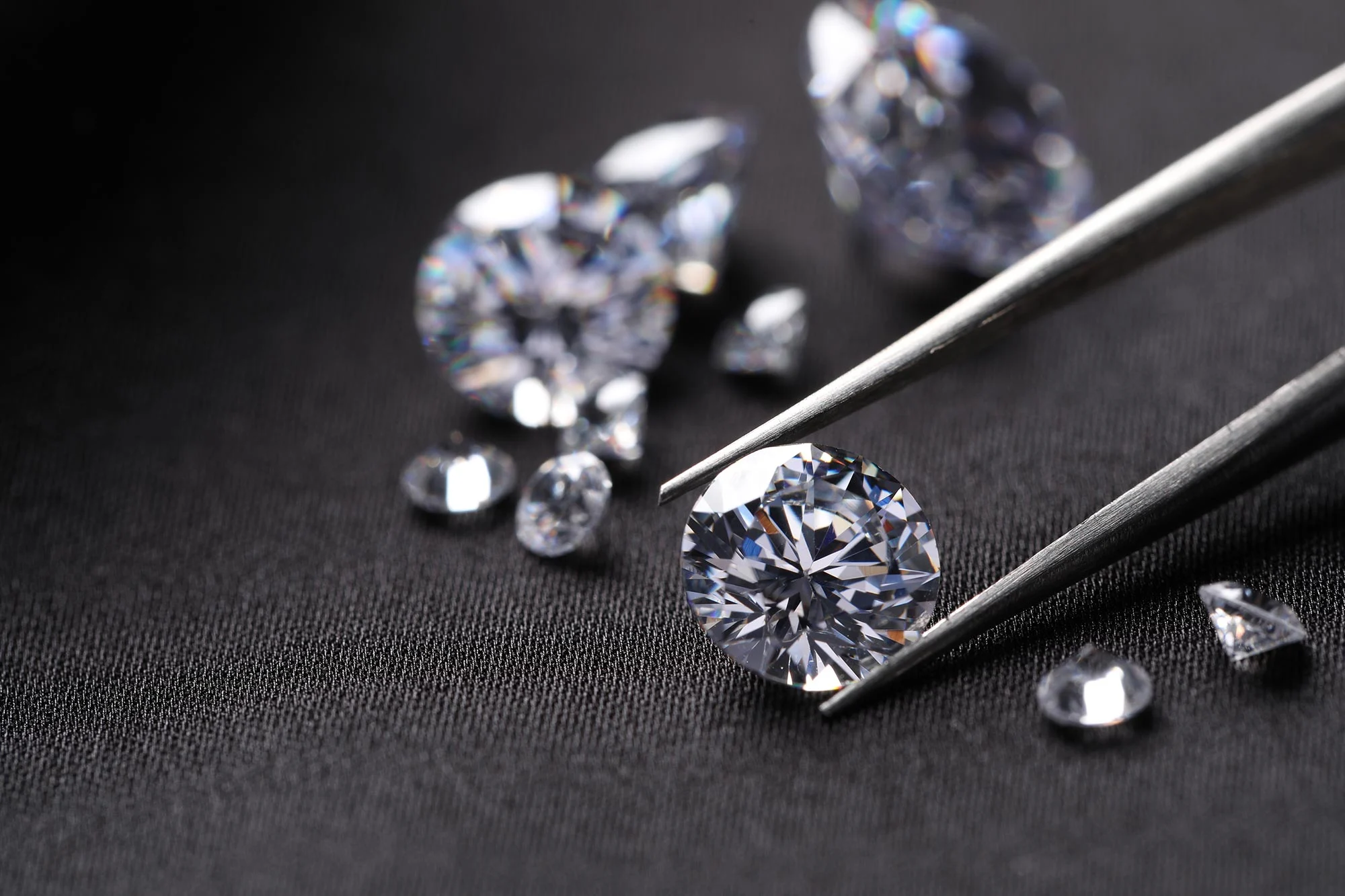
Researchers have demonstrated a way to transform ordinary plastic into extremely small diamonds using powerful laser pulses that briefly generate enormous pressures and temperatures.
Scientists at Helmholtz-Zentrum Dresden-Rossendorf (HZDR) and the University of Rostock, Germany, successfully produced and recovered nanodiamonds measuring approximately three nanometres across, each containing around 3,000 carbon atoms.
Although previous experiments had shown that diamonds could form when plastic was exposed to extreme conditions, recovering the particles intact had remained a major challenge.
The new research demonstrates that these tiny crystals can survive the transition from extreme pressure and temperature to ordinary conditions, making it possible to collect and examine them directly.
Published in Diamond and Related Materials, the findings could support the development of new methods for producing highly uniform nanodiamonds for applications in medicine, materials science, quantum sensing and energy technology.
𝐇𝐨𝐰 𝐂𝐚𝐧 𝐏𝐥𝐚𝐬𝐭𝐢𝐜 𝐁𝐞𝐜𝐨𝐦𝐞 𝐃𝐢𝐚𝐦𝐨𝐧𝐝?
Plastic and diamond may appear completely different, but both can contain carbon atoms.
Diamond consists of carbon atoms arranged in a rigid, three-dimensional crystal structure. Many plastics also contain carbon, although their atoms are bonded in long molecular chains alongside other elements.
Under sufficiently extreme conditions, the chemical bonds in carbon-containing materials can break and reorganise.
If the pressure and temperature are suitable, some of the carbon atoms can form the crystalline arrangement characteristic of diamond.
The researchers used powerful laser pulses to create these conditions for extremely short periods, allowing nanodiamonds to form from plastic.
𝐓𝐡𝐞 𝐑𝐞𝐬𝐞𝐚𝐫𝐜𝐡 𝐁𝐞𝐠𝐚𝐧 𝐖𝐢𝐭𝐡 𝐏𝐥𝐚𝐧𝐞𝐭𝐚𝐫𝐲 𝐒𝐜𝐢𝐞𝐧𝐜𝐞
The experiments originated from efforts to understand conditions deep inside planets such as Neptune and Uranus.
The interiors of these planets are believed to contain regions where pressures reach millions of times Earth's atmospheric pressure and temperatures rise to several thousand degrees Celsius.
Under such conditions, carbon-containing compounds may undergo chemical transformations that allow diamond crystals to form.
To investigate these processes, researchers began using high-power lasers to compress plastic samples.
Earlier experiments showed that nanodiamonds could form during these brief periods of extreme compression. However, the crystals could initially be detected only while the high-pressure conditions persisted.
The researchers wanted to determine whether the diamonds could survive after the pressure was released.
𝐃𝐢𝐚𝐦𝐨𝐧𝐝𝐬 𝐅𝐨𝐫𝐦𝐞𝐝 𝐅𝐚𝐬𝐭𝐞𝐫 𝐓𝐡𝐚𝐧 𝐄𝐱𝐩𝐞𝐜𝐭𝐞𝐝
One of the surprising observations was how quickly diamond formation occurred.
Professor Dominik Kraus, founding director of HZDR's HEDI Institute of High Energy Density Physics and a professor at the University of Rostock, explained that the team had expected nanodiamonds to form under the experimental conditions.
What surprised them was the speed of the transformation.
This rapid formation suggested that laser-driven compression might have applications beyond planetary research.
If nanodiamonds could be produced quickly and recovered efficiently, the technique might eventually offer another way to manufacture these particles.
𝐔𝐬𝐢𝐧𝐠 𝐋𝐚𝐬𝐞𝐫𝐬 𝐭𝐨 𝐂𝐫𝐞𝐚𝐭𝐞 𝐄𝐱𝐭𝐫𝐞𝐦𝐞 𝐏𝐫𝐞𝐬𝐬𝐮𝐫𝐞
The researchers conducted their experiments at the Extreme Light Infrastructure (ELI) facility south of Prague, Czech Republic.
The facility provides high-power laser systems capable of delivering intense pulses for experiments involving extreme physical conditions.
At the L4n-P3 experimental station, the team directed powerful laser pulses at a thin film of polyethylene terephthalate (PET), a common plastic.
The film measured approximately 100 micrometres thick, equivalent to 0.1 millimetres.
Each laser pulse generated a shock wave that travelled through the plastic, rapidly compressing and heating it.
These conditions caused carbon within the material to reorganise into nanodiamond crystals.
𝐏𝐫𝐨𝐝𝐮𝐜𝐢𝐧𝐠 𝐁𝐢𝐥𝐥𝐢𝐨𝐧𝐬 𝐨𝐟 𝐍𝐚𝐧𝐨𝐝𝐢𝐚𝐦𝐨𝐧𝐝𝐬 𝐢𝐧 𝐚 𝐒𝐢𝐧𝐠𝐥𝐞 𝐏𝐮𝐥𝐬𝐞
The laser system operated at approximately three pulses per minute.
As the beam moved across the PET film, each pulse created a shock wave and produced an enormous number of nanodiamonds.
The researchers estimated that approximately ten trillion nanodiamonds formed during a single laser shot.
However, producing the particles was only part of the challenge.
The team also needed to collect them without destroying their extremely small crystal structures.
𝐓𝐡𝐞 𝐃𝐢𝐚𝐦𝐨𝐧𝐝𝐬 𝐖𝐞𝐫𝐞 𝐄𝐣𝐞𝐜𝐭𝐞𝐝 𝐚𝐭 𝐄𝐱𝐭𝐫𝐞𝐦𝐞 𝐒𝐩𝐞𝐞𝐝
When the shock wave reached the end of the plastic sample, it entered a vacuum.
This sudden transition accelerated the newly formed nanodiamonds to speeds exceeding 10 kilometres per second, equivalent to more than 36,000 kilometres per hour.
At such speeds, the particles could be destroyed when they struck a solid collection surface.
Kraus compared the impact conditions to those experienced during a meteorite collision.
The researchers therefore needed a collection material capable of slowing the particles without immediately damaging them.
𝐀 𝐒𝐨𝐟𝐭 𝐆𝐞𝐥 𝐇𝐞𝐥𝐩𝐞𝐝 𝐂𝐚𝐩𝐭𝐮𝐫𝐞 𝐭𝐡𝐞 𝐃𝐢𝐚𝐦𝐨𝐧𝐝𝐬
To solve the collection problem, the team developed a method using a water-soluble ionic gel.
The gel was suitable for use under vacuum conditions and provided a softer surface for the rapidly moving nanodiamonds.
Instead of striking a rigid collector, the particles entered the gel, which helped reduce the damage caused by impact.
After collection, the researchers extracted the nanodiamonds from the gel and purified them for further examination.
This recovery method was essential to the experiment because it allowed the team to study particles that had survived the entire formation and collection process.
𝐑𝐞𝐜𝐨𝐯𝐞𝐫𝐢𝐧𝐠 𝐄𝐧𝐨𝐮𝐠𝐡 𝐌𝐚𝐭𝐞𝐫𝐢𝐚𝐥 𝐟𝐨𝐫 𝐀𝐧𝐚𝐥𝐲𝐬𝐢𝐬
Although each laser pulse produced an enormous number of nanodiamonds, the total mass of the recovered material remained small.
The researchers needed approximately 100 laser shots to collect a few hundred micrograms of material.
A microgram is one-millionth of a gram.
This quantity was sufficient for detailed microscopic examination, even though it remained far below the amounts required for most large-scale industrial applications.
The successful recovery established that the laser-generated crystals could be collected and characterised outside the extreme conditions in which they formed.
𝐄𝐥𝐞𝐜𝐭𝐫𝐨𝐧 𝐌𝐢𝐜𝐫𝐨𝐬𝐜𝐨𝐩𝐲 𝐂𝐨𝐧𝐟𝐢𝐫𝐦𝐞𝐝 𝐭𝐡𝐞 𝐍𝐚𝐧𝐨𝐝𝐢𝐚𝐦𝐨𝐧𝐝𝐬
The recovered material was examined using the ELMI-MV electron microscope at the University of Rostock's Department Life, Light & Matter.
The instrument provides extremely high-resolution images, allowing researchers to investigate structures at the atomic scale.
Ben Heuser, the study's lead author, conducted the experiments as part of his doctoral research at the University of Rostock.
Following extraction and purification, the team was able to observe the nanodiamonds directly.
The microscope's ability to resolve individual atoms helped researchers characterise the recovered particles and examine their crystalline structure.
𝐇𝐨𝐰 𝐒𝐦𝐚𝐥𝐥 𝐀𝐫𝐞 𝐓𝐡𝐞𝐬𝐞 𝐃𝐢𝐚𝐦𝐨𝐧𝐝𝐬?
The recovered nanodiamonds had an average diameter of approximately three nanometres.
One nanometre is one-billionth of a metre.
At this scale, each particle contains only a few thousand atoms.
The researchers estimated that the nanodiamonds consisted of roughly 3,000 carbon atoms per crystal.
Their exceptionally small dimensions distinguish them from conventional diamond particles used in industrial applications.
Despite their size, the particles retain the characteristic crystalline arrangement of diamond.
𝐖𝐡𝐲 𝐏𝐚𝐫𝐭𝐢𝐜𝐥𝐞 𝐒𝐢𝐳𝐞 𝐌𝐚𝐭𝐭𝐞𝐫𝐬
The size of a nanodiamond strongly influences its properties and potential applications.
Smaller particles have a greater surface-area-to-volume ratio, meaning a larger proportion of their atoms are located near the surface.
For a given mass of material, reducing particle size increases the combined surface area available for interactions with other substances.
This can be particularly useful in applications involving surface chemistry.
Small particles may also be suitable for technologies that require precise control over material dimensions.
𝐖𝐡𝐲 𝐔𝐧𝐢𝐟𝐨𝐫𝐦 𝐍𝐚𝐧𝐨𝐝𝐢𝐚𝐦𝐨𝐧𝐝𝐬 𝐀𝐫𝐞 𝐕𝐚𝐥𝐮𝐚𝐛𝐥𝐞
Conventional nanodiamond production methods can produce particles with a broad range of sizes.
Some techniques, including detonation-based synthesis, also require additional purification to remove unwanted materials.
The laser-driven method produced nanodiamonds with a combination of high purity, extremely small dimensions and relatively consistent particle sizes.
These characteristics could be useful where predictable particle behaviour is important.
More uniform nanodiamonds may also reduce the need for extensive processing to separate particles according to size.
𝐏𝐨𝐭𝐞𝐧𝐭𝐢𝐚𝐥 𝐀𝐩𝐩𝐥𝐢𝐜𝐚𝐭𝐢𝐨𝐧𝐬 𝐢𝐧 𝐌𝐞𝐝𝐢𝐜𝐚𝐥 𝐈𝐦𝐚𝐠𝐢𝐧𝐠
Nanodiamonds are being investigated for several biomedical applications, including medical imaging.
One possibility involves modifying the particles so that they can function as contrast agents.
Contrast agents help distinguish particular tissues or structures during medical examinations.
The researchers suggested that incorporating selected atoms into nanodiamonds could help tailor their properties for applications such as magnetic resonance imaging (MRI).
However, the suitability of these laser-produced particles for medical use still requires further investigation.
𝐃𝐨𝐩𝐢𝐧𝐠 𝐂𝐨𝐮𝐥𝐝 𝐂𝐡𝐚𝐧𝐠𝐞 𝐓𝐡𝐞𝐢𝐫 𝐏𝐫𝐨𝐩𝐞𝐫𝐭𝐢𝐞𝐬
One potential advantage of producing nanodiamonds from plastic is the possibility of introducing additional elements into the starting material.
These atoms may become incorporated into the diamond particles during formation.
This process is known as doping.
In materials science, doping involves introducing selected elements or impurities to modify a material's properties.
For nanodiamonds, carefully controlled doping could help create particles with characteristics suited to particular applications.
The researchers identified medical imaging as one area where such modifications might prove useful.
𝐍𝐚𝐧𝐨𝐝𝐢𝐚𝐦𝐨𝐧𝐝𝐬 𝐟𝐨𝐫 𝐐𝐮𝐚𝐧𝐭𝐮𝐦 𝐒𝐞𝐧𝐬𝐢𝐧𝐠
Another possible application is quantum sensing.
Quantum sensors use quantum-mechanical properties to measure physical quantities with high sensitivity.
Certain defects within diamond crystals can exhibit useful quantum behaviour.
By controlling the atomic structure and composition of nanodiamonds, researchers may be able to develop particles suitable for specialised sensing technologies.
The laser-based production method could offer opportunities to investigate such materials, although the required quantum properties have not yet been demonstrated for these recovered particles.
𝐒𝐦𝐚𝐥𝐥𝐞𝐫 𝐃𝐢𝐚𝐦𝐨𝐧𝐝𝐬 𝐂𝐨𝐮𝐥𝐝 𝐒𝐮𝐩𝐩𝐨𝐫𝐭 𝐂𝐡𝐞𝐦𝐢𝐜𝐚𝐥 𝐑𝐞𝐚𝐜𝐭𝐢𝐨𝐧𝐬
Nanodiamonds are also of interest in catalysis.
Catalysts accelerate chemical reactions without being consumed in the overall process.
Because very small particles have a large combined surface area relative to their mass, they can provide more sites for chemical interactions.
The researchers suggested that nanodiamonds could potentially support catalytic processes, including reactions involved in splitting carbon dioxide using sunlight.
Such applications remain prospective and would require further development and testing.
𝐄𝐱𝐢𝐬𝐭𝐢𝐧𝐠 𝐔𝐬𝐞𝐬 𝐨𝐟 𝐍𝐚𝐧𝐨𝐝𝐢𝐚𝐦𝐨𝐧𝐝𝐬
Nanodiamonds are already used in certain grinding and polishing materials.
Their hardness makes them useful for abrasive applications, while their chemical stability and resistance to heat can be advantageous under demanding conditions.
The ability to produce smaller, cleaner and more uniform particles could expand the range of possible applications.
Researchers are particularly interested in areas where the surface properties, size and atomic composition of nanodiamonds can be carefully controlled.
𝐓𝐡𝐞 𝐂𝐡𝐚𝐥𝐥𝐞𝐧𝐠𝐞 𝐨𝐟 𝐒𝐜𝐚𝐥𝐢𝐧𝐠 𝐔𝐩 𝐏𝐫𝐨𝐝𝐮𝐜𝐭𝐢𝐨𝐧
Although the experiments successfully produced and recovered nanodiamonds, the amount collected was relatively small.
Approximately 100 laser shots were needed to obtain a few hundred micrograms.
For the technique to become useful in larger-scale manufacturing, production would need to increase substantially.
The researchers believe improvements in laser technology could help address this limitation.
More efficient systems capable of delivering high-energy pulses at greater repetition rates would allow more production cycles within a given period.
𝐇𝐨𝐰 𝐅𝐮𝐬𝐢𝐨𝐧 𝐑𝐞𝐬𝐞𝐚𝐫𝐜𝐡 𝐂𝐨𝐮𝐥𝐝 𝐇𝐞𝐥𝐩
Developments in fusion research are contributing to advances in high-power laser technology.
Researchers are working on laser systems that can deliver intense pulses more frequently while using energy more efficiently.
These improvements could also benefit laser-driven nanodiamond production.
Higher repetition rates would allow more plastic samples to be compressed over shorter periods, potentially increasing the total amount of material produced.
The research team hopes to use these technological advances to make the process more practical.
𝐓𝐨𝐰𝐚𝐫𝐝 𝐌𝐢𝐥𝐥𝐢𝐠𝐫𝐚𝐦-𝐒𝐜𝐚𝐥𝐞 𝐏𝐫𝐨𝐝𝐮𝐜𝐭𝐢𝐨𝐧
The researchers plan to continue their experiments at the University of Rostock and at large-scale research facilities.
One objective is to increase the amount of recovered nanodiamond material into the milligram range.
A milligram is one-thousandth of a gram.
Achieving this level of production would bring the method closer to quantities obtained through conventional nanodiamond synthesis.
However, further improvements would still be necessary before its industrial scalability and economic competitiveness could be established.
𝐂𝐨𝐮𝐥𝐝 𝐋𝐚𝐬𝐞𝐫𝐬 𝐀𝐥𝐬𝐨 𝐂𝐫𝐞𝐚𝐭𝐞 𝐚 𝐍𝐞𝐰 𝐅𝐨𝐫𝐦 𝐨𝐟 𝐂𝐚𝐫𝐛𝐨𝐧?
Beyond producing nanodiamonds, the researchers want to investigate whether laser compression can create another carbon structure known as BC8.
BC8 is a theoretically predicted form of carbon with a crystal arrangement different from conventional diamond.
It is expected to be denser than diamond, similarly hard and potentially less brittle.
The extreme conditions thought necessary for its formation do not occur naturally on Earth.
Researchers therefore hope that powerful laser pulses could generate sufficiently high pressures to produce it experimentally.
𝐖𝐡𝐲 𝐁𝐂𝟖 𝐈𝐬 𝐨𝐟 𝐒𝐜𝐢𝐞𝐧𝐭𝐢𝐟𝐢𝐜 𝐈𝐧𝐭𝐞𝐫𝐞𝐬𝐭
The predicted properties of BC8 make it an interesting candidate for research into advanced carbon materials.
Diamond is exceptionally hard, but its brittleness can limit certain applications.
A carbon structure that combines comparable hardness with reduced brittleness could offer different mechanical characteristics.
However, these properties remain theoretical until the material can be produced and examined experimentally.
The researchers intend to explore whether even higher laser-generated pressures can transform plastic into BC8.
An initial experiment was planned for November 2026.
𝐅𝐫𝐨𝐦 𝐏𝐥𝐚𝐧𝐞𝐭𝐚𝐫𝐲 𝐑𝐞𝐬𝐞𝐚𝐫𝐜𝐡 𝐭𝐨 𝐌𝐚𝐭𝐞𝐫𝐢𝐚𝐥𝐬 𝐌𝐚𝐧𝐮𝐟𝐚𝐜𝐭𝐮𝐫𝐢𝐧𝐠
The study illustrates how research originally intended to investigate planetary interiors can lead to new approaches in materials science.
By recreating extreme conditions similar to those believed to exist inside ice giant planets, scientists discovered that nanodiamonds could form rapidly from plastic.
The latest experiments moved beyond observing their formation.
The team demonstrated that the particles could be recovered intact, purified and examined using high-resolution electron microscopy.
This provides a foundation for investigating whether laser-driven compression can become a practical method for producing specialised carbon materials.
𝐖𝐡𝐚𝐭 𝐭𝐡𝐞 𝐅𝐢𝐧𝐝𝐢𝐧𝐠𝐬 𝐌𝐞𝐚𝐧
Researchers at HZDR and the University of Rostock have demonstrated that powerful laser pulses can transform thin PET plastic films into nanodiamonds measuring approximately three nanometres across.
The particles, containing around 3,000 carbon atoms each, formed under extreme pressure and temperature before being ejected at speeds exceeding 10 kilometres per second.
Using a water-soluble ionic gel, the team successfully collected the particles without destroying them and recovered enough material for detailed microscopic analysis.
The technique produced nanodiamonds with high purity and relatively uniform dimensions, characteristics that could be valuable for future applications in medical imaging, quantum sensing, catalysis and advanced materials.
For now, the method remains experimental, and production quantities are small. Its wider usefulness will depend on improvements in laser efficiency, repetition rates, particle recovery and manufacturing costs.
Nevertheless, the research demonstrates that a common carbon-containing plastic can serve as the starting material for producing highly specialised diamond nanoparticles.
𝐉𝐨𝐮𝐫𝐧𝐚𝐥 𝐑𝐞𝐟𝐞𝐫𝐞𝐧𝐜𝐞
B. Heuser, P. Böhringer, K. Oldenburg, F. P. Condamine, G. Fauvel, M.-L. Herbert, J. Kuhkle, T. Laštovička, P. Luckmann, J. Lütgert, P. T. May, D. Ranjan, S. Schumacher, R. L. Singh, M. Stevenson, S. Weber and D. Kraus.
“Recovery of ultrasmall nanodiamonds from plastics shock-compressed to pressures around 100 GPa.”
Diamond and Related Materials, 25 August 2026.