Sep072026
Application deadline
View prize details
NSPS Best PhD Thesis Prize 2026
Applications are open for five prizes recognising outstanding doctoral research across the physical sciences.
NSPS is a learned academic society promoting research, conferences, peer-reviewed publications, professional membership, prizes, and scientific recognition across the physical sciences.




Calls, conferences, ceremonies, and dates worth adding to your calendar.
Applications are open for five prizes recognising outstanding doctoral research across the physical sciences.
Meet the researchers whose doctoral work is advancing the frontiers of the physical sciences in Nigeria.
Landmark University, Omu Aran, Kwara
Adekunle Ajasin University, Akungba Akoko, Ondo
Redeemer's University, Ede, Osun
Covenant University, Sango Ota, Ogun
Ahmadu Bello University, Zaria, Kaduna
NSPS brings researchers, educators, reviewers, students, and scientific leaders together to strengthen scholarship and public impact across the physical sciences.
Support discovery, publication, and interdisciplinary collaboration.
Create meaningful connections across disciplines and career stages.
Celebrate research, reviewing, fellowship, and scientific leadership.
Original research and scholarly contributions across the physical sciences.
Open accessResearch outputs and reports across scientific disciplines.
ProceedingsConference papers, scientific proceedings, and scholarly records.
Discover research updates, Society news, and achievements from across the NSPS community.

Scientists have directly observed how organised patterns of tiny magnetic structures, known as skyrmions, break apart in real time, revealing new possibilities for controlling magnetism at the nanoscale. The research, conducted primarily at Johannes Gutenberg University Mainz in Germany, with contributions from the Norwegian University of Science and Technology (NTNU), provides new insights into the behaviour of magnetic skyrmions and their potential use in future computing technologies. For the first time, researchers captured the melting of a two-dimensional skyrmion lattice while examining and manipulating individual magnetic structures as the process unfolded.
Read story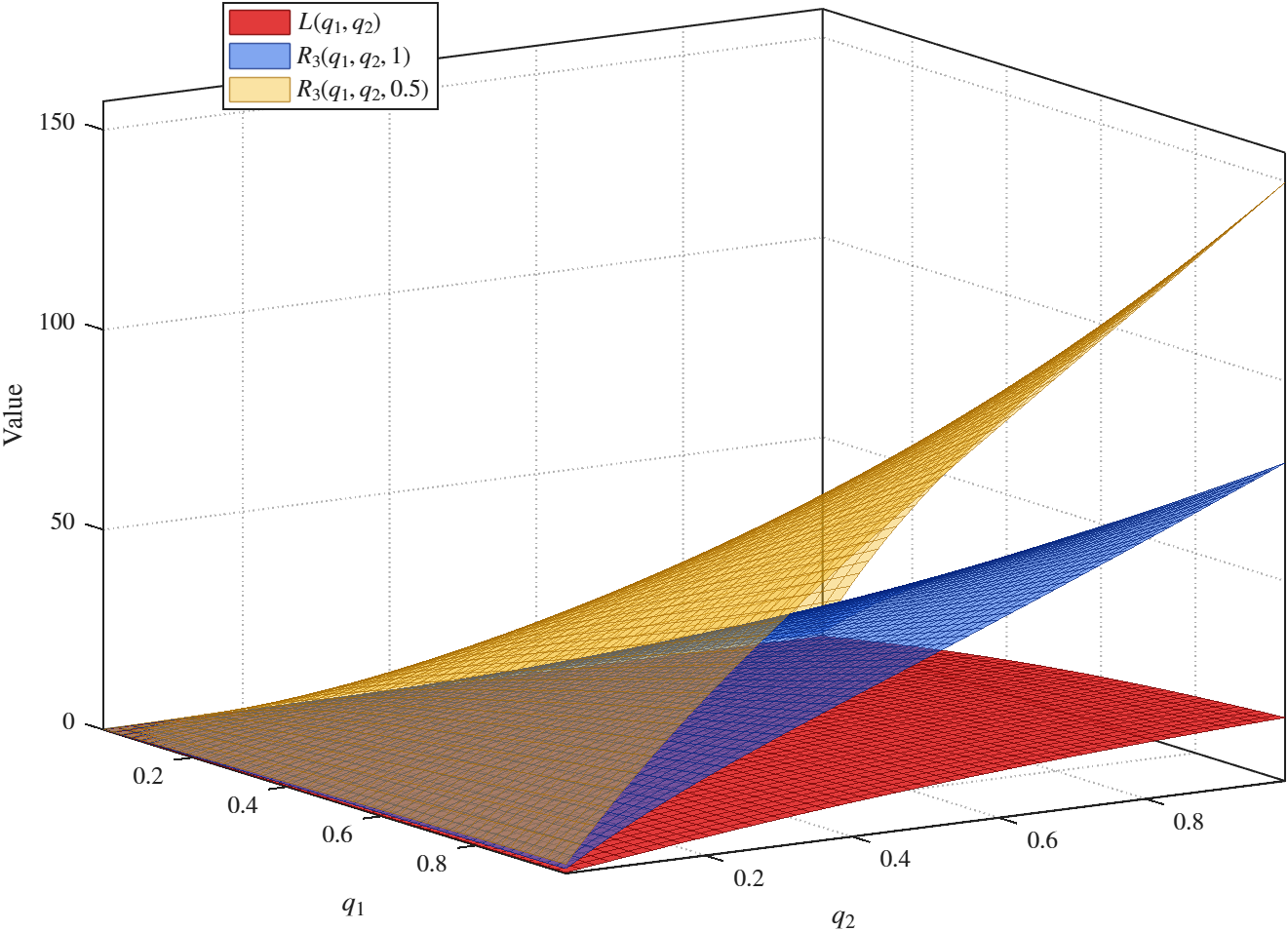
A recent study published in the Journal of the Nigerian Society of Physical Sciences established new q-trapezoid-type inequalities for q-differentiable coordinated strongly s-convex functions on bidimensional intervals. The researchers adopted a symmetric modulus convention for both coordinates and derived the main estimates using a quantum integral identity, the q-Hölder inequality, and the q-power mean inequality. The corresponding classical inequalities were recovered by letting q₁ and q₂ approach 1 from below. Explicit examples verified the required strong s-convexity assumptions, while numerical computations on a specified finite grid and graphical illustrations supported the theoretical estimates.
Read story
The Nigerian Society of Physical Sciences (NSPS) is pleased to celebrate 𝐃𝐫. 𝐎𝐥𝐮𝐰𝐚𝐤𝐞𝐦𝐢 𝐎𝐦𝐨𝐰𝐮𝐦𝐢 𝐄𝐟𝐞𝐦𝐞𝐧𝐚, our Spotlight Member of the Week.
Read storyJoin NSPS, contribute as a reviewer, access professional recognition, and connect your work to a national community of physical scientists.