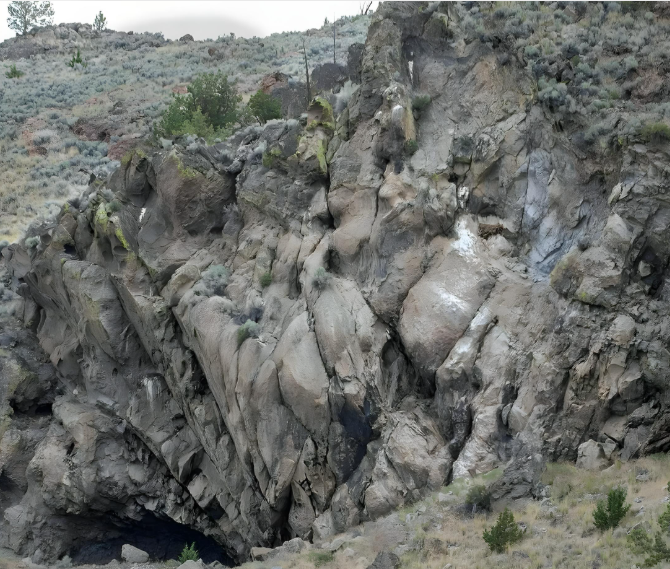
A remarkable archaeological discovery in Oregon, United States, is providing new insights into the technological skills and survival strategies of ancient humans. Researchers have uncovered exceptionally preserved fragments of animal hide stitched together with cords, alongside ancient fibers, bone needles, wooden tools and other artifacts dating back approximately 12,000 years. The discoveries were made at Cougar Mountain Cave and other archaeological sites in Oregon’s northern Great Basin region. These artifacts are significantly older than Egypt’s Great Pyramid of Giza, which was constructed approximately 4,500 years ago. The findings offer rare physical evidence of how early Indigenous communities developed sophisticated technologies long before the emergence of many ancient civilizations commonly celebrated in history books.
The most striking aspect of the discovery is evidence of ancient sewing technology. Scientists identified pieces of animal hide that had been carefully processed and joined using cords made from plant fibers and animal materials. These stitched fragments may have formed part of fitted clothing, footwear or other protective items, although their exact purpose remains uncertain. The artifacts demonstrate that prehistoric people possessed detailed knowledge of natural resources, including how to prepare animal skins, extract fibers, manufacture cords and create tools for sewing. Such skills would have been essential for surviving the harsh conditions of the final stages of the Ice Age, when temperatures were considerably colder than today. The discovery also highlights the importance of clothing not only for protection against the environment but potentially for cultural expression and personal identity.
An important reason these artifacts survived for thousands of years is the dry environment of the caves, which helped preserve materials that would normally decay rapidly. Researchers used radiocarbon dating and other scientific techniques to establish the age and composition of the objects. The findings, reported in the journal Science Advances in February 2026, are significant because organic materials such as leather, plant fibers and wooden tools are rarely preserved in archaeological records. This discovery challenges the assumption that early human technologies can be understood primarily through stone tools and bones. Instead, it reveals a much more complex picture of prehistoric innovation, resourcefulness and adaptation. As further studies continue, these ancient objects may help scientists reconstruct how early communities lived, developed technologies and responded to changing environmental conditions. The discovery reminds us that human ingenuity existed long before monumental architecture and written history.