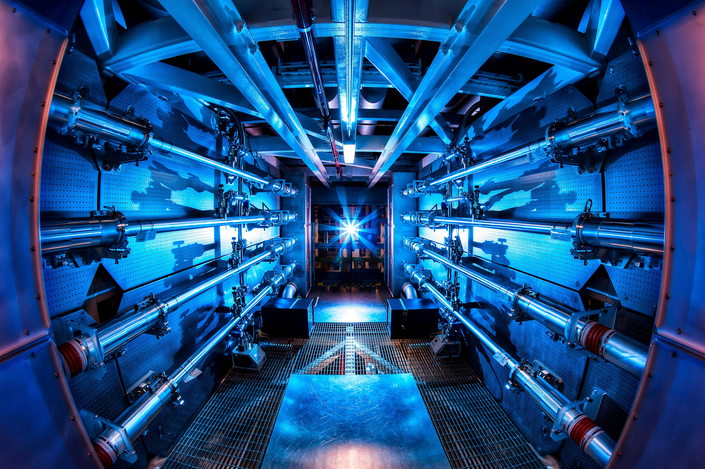
Imagine producing electricity using the same fundamental process that powers the Sun! Nuclear fusion is one of the most exciting frontiers in modern physics. Unlike conventional nuclear power plants, which generate energy through nuclear fission (splitting heavy atomic nuclei), fusion releases energy by combining light nuclei under extremely high temperatures and pressures. Scientists are developing technologies that could eventually provide abundant, low-carbon electricity with reduced long-lived radioactive waste compared with conventional fission systems. In June 2026, researchers at the United States National Ignition Facility achieved fusion ignition for the eleventh time, producing approximately 7.9 megajoules of fusion energy from a laser-driven experiment. This demonstrated the growing ability to reproduce important fusion conditions in a laboratory.
The science behind this achievement is remarkable. At extreme temperatures, matter becomes plasma, a highly energetic state in which electrons separate from atomic nuclei. Under suitable conditions, light nuclei can overcome their electrical repulsion and fuse, releasing energy. Researchers are exploring different approaches, including powerful lasers, magnetic confinement and innovative fuel-compression techniques. In October 2026, General Fusion also announced a milestone in its magnetised target fusion programme, achieving electron temperatures above 12 million degrees Celsius. These developments demonstrate that fusion research continues to advance through different scientific and engineering approaches. However, the energy produced by a fusion reaction is not the same as the total energy consumed by an entire experimental facility, and practical, economical electricity generation remains a major challenge.
Why should we care? Successful commercial fusion could transform electricity generation, support energy-intensive industries, and contribute to global efforts to reduce greenhouse-gas emissions. Nevertheless, scientists must still overcome major challenges involving sustained plasma confinement, heat-resistant materials, fuel supply, maintenance and the overall economics of power production. Fusion electricity is not yet commercially available at scale, but every experimental milestone improves our understanding of extreme matter and energy. The future of energy may depend on how successfully humanity learns to harness the power of the stars!