Researchers at Arizona State University and collaborating institutions have developed a water-treatment technology capable of chemically breaking down persistent pollutants known as per- and polyfluoroalkyl substances (PFAS), commonly called “forever chemicals.”
Unlike conventional treatment methods that primarily capture these contaminants, the new system uses palladium-coated membrane fibres and hydrogen to attack the strong chemical bonds responsible for their environmental persistence.
During a continuous 58-day experiment, the technology removed more than 90% of each of six PFAS compounds examined and achieved approximately 83% fluorine removal, providing evidence that the contaminants were undergoing chemical degradation rather than simply being separated from water.
The findings, published in the Proceedings of the National Academy of Sciences (PNAS), demonstrate a potentially important approach to treating PFAS-contaminated water.
𝐖𝐡𝐲 𝐏𝐅𝐀𝐒 𝐀𝐫𝐞 𝐒𝐨 𝐃𝐢𝐟𝐟𝐢𝐜𝐮𝐥𝐭 𝐭𝐨 𝐃𝐞𝐬𝐭𝐫𝐨𝐲
PFAS are a group of synthetic chemicals widely used in industrial and consumer products because of their resistance to heat, water and other environmental conditions.
They are found in products such as nonstick cookware, waterproof clothing, food packaging and firefighting foams.
However, the same chemical stability that makes PFAS useful also allows them to remain in the environment for extended periods.
These substances can persist in soil, water, wildlife and the human body. Exposure to certain PFAS compounds has been associated with health concerns, including cancer, thyroid disorders, immune system problems and reproductive health risks.
A major reason for their persistence is the presence of exceptionally strong carbon–fluorine bonds within their molecular structures.
These bonds are among the strongest in organic chemistry, making PFAS highly resistant to conventional chemical and biological degradation processes.
According to Bruce Rittmann, director of Arizona State University's Biodesign Swette Center for Environmental Biotechnology, the stability of these bonds makes PFAS particularly challenging to break down using ordinary treatment methods.
Fluorine atoms surrounding the carbon backbone also make it difficult for conventional degradation processes to initiate reactions that would dismantle the molecules.
As a result, removing PFAS from contaminated water has remained a major environmental challenge.
𝐓𝐡𝐞 𝐋𝐢𝐦𝐢𝐭𝐚𝐭𝐢𝐨𝐧 𝐨𝐟 𝐂𝐨𝐧𝐯𝐞𝐧𝐭𝐢𝐨𝐧𝐚𝐥 𝐏𝐅𝐀𝐒 𝐓𝐫𝐞𝐚𝐭𝐦𝐞𝐧𝐭
Many existing water-treatment technologies rely on filtration, membranes or other materials to capture PFAS from contaminated water.
Although these approaches can remove pollutants from the treated water, they do not necessarily destroy the chemical compounds.
Instead, the PFAS remain concentrated in the materials or waste streams produced during treatment.
This creates an additional challenge because the contaminated waste must still be managed.
The Arizona State University researchers investigated a different approach designed to attack the molecular structure of PFAS and break the chemical bonds that make them resistant to degradation.
Rather than focusing exclusively on separating the contaminants from water, the researchers developed a system that combines pollutant capture with chemical transformation.
𝐇𝐨𝐰 𝐏𝐚𝐥𝐥𝐚𝐝𝐢𝐮𝐦-𝐂𝐨𝐚𝐭𝐞𝐝 𝐌𝐞𝐦𝐛𝐫𝐚𝐧𝐞𝐬 𝐁𝐫𝐞𝐚𝐤 𝐃𝐨𝐰𝐧 𝐏𝐅𝐀𝐒
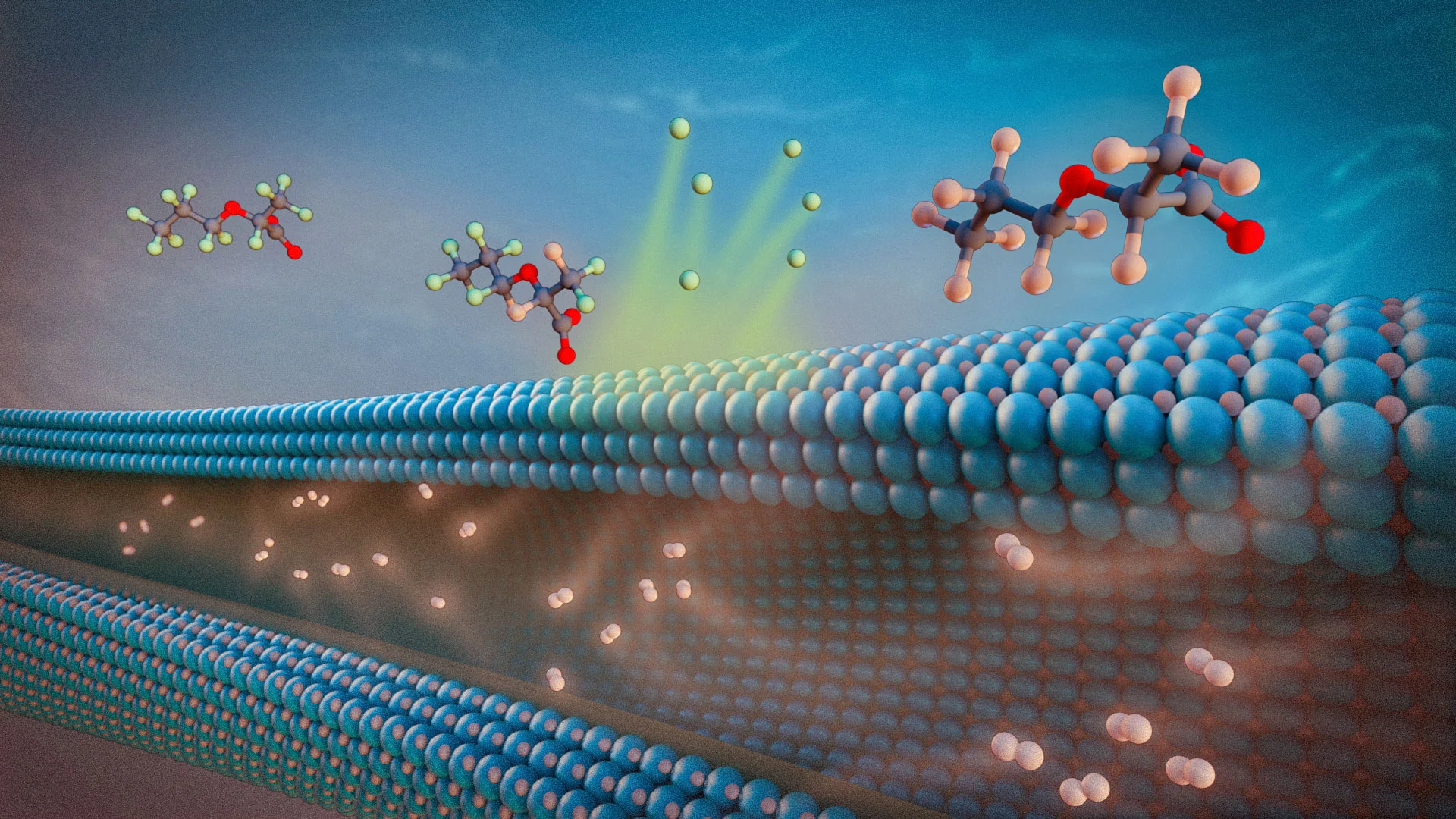
The new treatment system uses tiny membrane fibres coated with palladium nanoparticles, which play a central role in the chemical degradation process.
Hydrogen gas is supplied through the membrane fibres and transported to the palladium coating.
The palladium activates the hydrogen, enabling it to participate in reactions that break carbon–fluorine bonds in PFAS molecules approaching from the surrounding water.
According to Rittmann, palladium helps bring the PFAS molecules and hydrogen together, allowing the chemical reaction to take place.
This process is known as hydrodefluorination, in which hydrogen participates in the removal of fluorine from the molecular structure.
By targeting the carbon–fluorine bonds, the system addresses the chemical feature responsible for the exceptional persistence of PFAS.
The technology builds on an earlier membrane-based treatment approach that supplies hydrogen to bacteria capable of degrading pollutants.
In the new system, however, palladium replaces the microorganisms as the component responsible for promoting the chemical reaction.
This modification allows the researchers to use a catalytic process to attack PFAS molecules directly.
𝐓𝐡𝐞 𝟓𝟖-𝐃𝐚𝐲 𝐄𝐱𝐩𝐞𝐫𝐢𝐦𝐞𝐧𝐭 𝐃𝐞𝐦𝐨𝐧𝐬𝐭𝐫𝐚𝐭𝐞𝐬 𝐒𝐮𝐬𝐭𝐚𝐢𝐧𝐞𝐝 𝐏𝐅𝐀𝐒 𝐑𝐞𝐦𝐨𝐯𝐚𝐥
To evaluate the technology, the researchers conducted a continuous treatment experiment lasting 58 days.
The system was tested against six PFAS compounds of regulatory concern.
During the experiment, the palladium-coated membranes removed more than 90% of each of the six compounds.
The researchers also measured approximately 83% fluorine removal.
This second result is particularly important because it provides evidence that the PFAS molecules were undergoing chemical breakdown rather than simply being captured by the membrane.
The findings therefore demonstrate both substantial contaminant removal and chemical degradation under the conditions examined.
Rittmann reported that the mechanism worked for all six PFAS compounds tested, indicating that the catalytic approach was effective across the different substances included in the experiment.
However, the results do not establish that the technology will perform identically against every PFAS compound or under all environmental conditions.
The study provides experimental evidence supporting the potential of palladium-catalysed hydrogen reactions as a method for treating persistent PFAS contamination.
𝐀𝐝𝐝𝐫𝐞𝐬𝐬𝐢𝐧𝐠 𝐚 𝐖𝐢𝐝𝐞𝐬𝐩𝐫𝐞𝐚𝐝 𝐄𝐧𝐯𝐢𝐫𝐨𝐧𝐦𝐞𝐧𝐭𝐚𝐥 𝐏𝐫𝐨𝐛𝐥𝐞𝐦
PFAS contamination has become an important environmental concern because these chemicals can persist in groundwater, wastewater, soil and food supplies.
Elevated concentrations are particularly associated with locations such as landfills, airports, military installations and facilities where PFAS-containing firefighting foams have been used.
Once released, these substances can remain in the environment and move through food chains.
Their persistence makes contamination difficult to address because removing PFAS from one environmental compartment does not necessarily eliminate the compounds.
The development of treatment technologies capable of chemically breaking down PFAS could therefore provide an alternative to methods that only transfer the contaminants into concentrated waste.
The palladium-coated membrane system offers one possible approach by combining contaminant capture with reactions intended to dismantle the molecules.
𝐓𝐡𝐞 𝐂𝐡𝐚𝐥𝐥𝐞𝐧𝐠𝐞 𝐨𝐟 𝐌𝐚𝐤𝐢𝐧𝐠 𝐭𝐡𝐞 𝐓𝐞𝐜𝐡𝐧𝐨𝐥𝐨𝐠𝐲 𝐏𝐫𝐚𝐜𝐭𝐢𝐜𝐚𝐥
Although the experimental results are promising, several challenges remain before the technology can be deployed on a larger scale.
One of the most significant obstacles is the cost of palladium.
According to Rittmann, palladium costs approximately $50,000 per kilogram, making the amount required for treatment an important consideration in future system development.
The researchers are investigating ways to reduce palladium requirements while maintaining the effectiveness of the chemical degradation process.
They are also exploring how the technology could be combined with existing filtration systems.
Such combinations could allow conventional treatment methods to capture PFAS while the catalytic membranes contribute to their chemical breakdown.
Another research direction involves developing hybrid membranes that combine palladium with pollutant-degrading bacteria.
These systems are designed to attack contaminants through different mechanisms within the same treatment approach.
Rittmann indicated that the researchers have also demonstrated that this combined approach can work.
The ongoing investigations aim to improve the practicality of the technology and determine how it could be incorporated into future water-treatment systems.
𝐀 𝐍𝐞𝐰 𝐃𝐢𝐫𝐞𝐜𝐭𝐢𝐨𝐧 𝐟𝐨𝐫 𝐃𝐞𝐬𝐭𝐫𝐨𝐲𝐢𝐧𝐠 𝐅𝐨𝐫𝐞𝐯𝐞𝐫 𝐂𝐡𝐞𝐦𝐢𝐜𝐚𝐥𝐬
The study demonstrates a potentially important advance in the treatment of persistent PFAS contamination.
By using hydrogen and palladium-coated membranes, the researchers developed a system that targets the strong carbon–fluorine bonds responsible for the chemical stability of these pollutants.
The 58-day experiment showed sustained treatment performance, with more than 90% removal of each of six tested PFAS compounds and approximately 83% fluorine removal.
These results provide evidence that the approach can promote chemical degradation rather than relying solely on contaminant separation.
Nevertheless, the cost of palladium and the challenges associated with scaling up the system remain important limitations.
Further research into reducing palladium requirements, integrating the technology with existing filtration systems and developing hybrid catalytic-biological membranes could help address these challenges.
Although the findings do not yet demonstrate large-scale commercial application, they establish an experimental basis for a water-treatment approach designed to destroy persistent PFAS compounds.
𝐑𝐞𝐬𝐞𝐚𝐫𝐜𝐡 𝐑𝐞𝐟𝐞𝐫𝐞𝐧𝐜𝐞
M. Long, A.-S. Wang, W. C. Elias, C. Zhou, T. P. Senftle, M. S. Wong, J. Cheng, and B. E. Rittmann, “Catalytic reactive-hydrogen membranes for rapid capture and hydrodefluorination of six PFAS of regulatory concern,” Proceedings of the National Academy of Sciences, 19 October 2026. https://doi.org/10.1073/pnas.2613985123