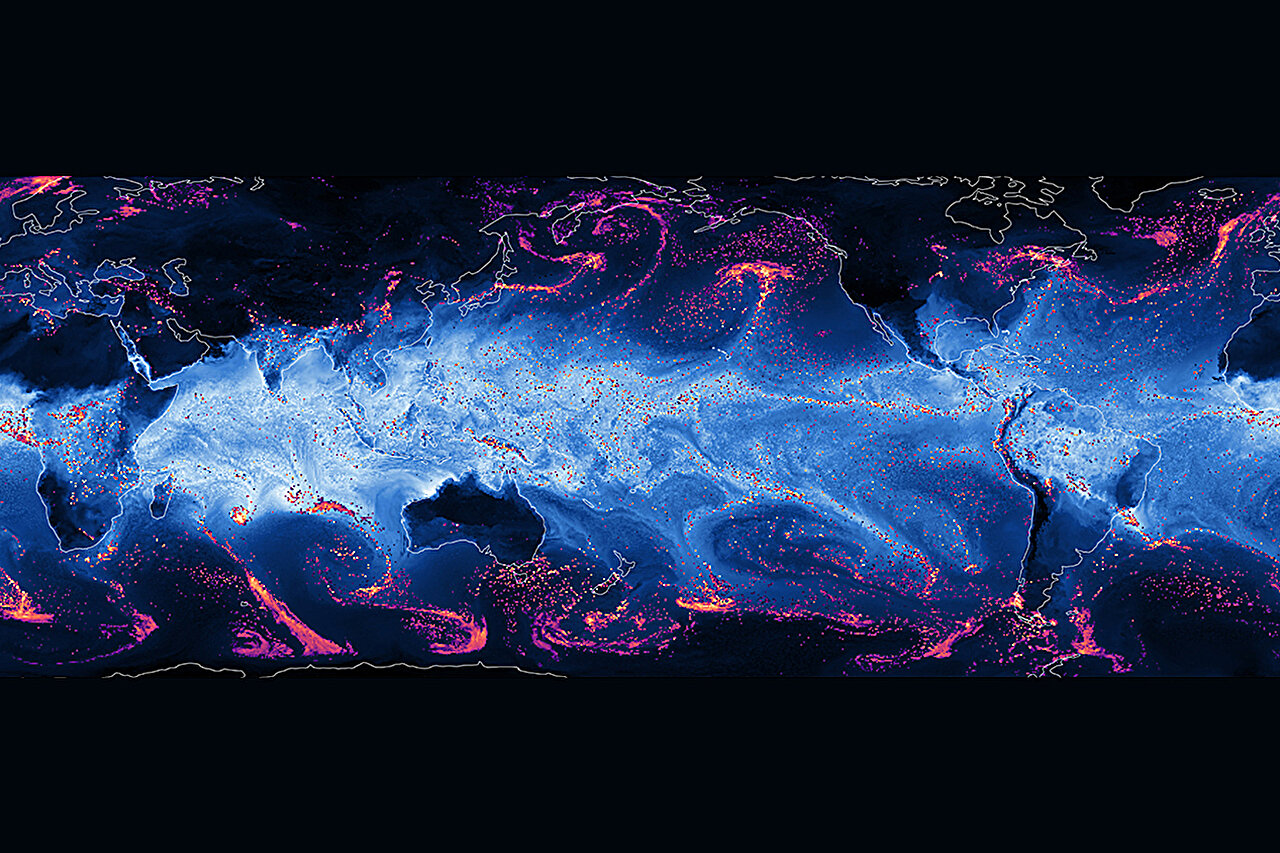
Researchers at Lawrence Livermore National Laboratory (LLNL) are developing machine-learning-based atmospheric emulators designed to accelerate Earth system simulations and improve predictions of weather patterns over periods ranging from months to years.
The research focuses on replacing some of the computationally intensive calculations used in conventional atmospheric models with artificial intelligence systems trained to reproduce the behaviour of high-resolution physics simulations.
One of the central developments is STRATA, an atmospheric emulator that uses machine learning to predict how the atmosphere evolves without repeatedly solving the complex physical equations required by traditional models.
The approach could allow researchers to perform hundreds of simulations within substantially shorter periods, improving their ability to investigate weather uncertainty, evaluate different atmospheric conditions and support long-term environmental planning.
The researchers are also developing complementary technologies to improve how atmospheric models represent clouds, turbulence and other small-scale processes that influence global weather patterns.
𝐖𝐡𝐲 𝐓𝐫𝐚𝐝𝐢𝐭𝐢𝐨𝐧𝐚𝐥 𝐀𝐭𝐦𝐨𝐬𝐩𝐡𝐞𝐫𝐢𝐜 𝐒𝐢𝐦𝐮𝐥𝐚𝐭𝐢𝐨𝐧𝐬 𝐀𝐫𝐞 𝐒𝐨 𝐂𝐨𝐦𝐩𝐮𝐭𝐚𝐭𝐢𝐨𝐧𝐚𝐥𝐥𝐲 𝐃𝐞𝐦𝐚𝐧𝐝𝐢𝐧𝐠
Accurately simulating Earth's atmosphere requires scientists to represent physical processes occurring across an enormous range of spatial scales.
If the Earth system were divided into approximately one-kilometre-wide computational cells extending from near the surface to the upper atmosphere, the resulting model would contain billions of individual regions.
Each region would require calculations describing how atmospheric conditions change and interact with neighbouring regions over time.
These calculations involve complex physical equations governing the behaviour of air, moisture, temperature and other atmospheric processes.
The difficulty increases because local atmospheric phenomena, including turbulence and cloud formation, interact with much larger circulation patterns.
According to Peter Caldwell, an LLNL scientist who leads the U.S. Department of Energy's Exascale Earth System Model (E3SM), atmospheric modelling must account for the movement of air around the entire globe.
An air mass can take approximately one week to circulate around the planet, making global atmospheric interactions important even when scientists are interested in particular locations.
High-resolution Earth system models therefore require substantial computational resources.
Simulating approximately ten years of atmospheric behaviour can take months on some of the world's most powerful supercomputers, yet the resulting simulations may still be unable to represent every relevant physical process accurately.
This combination of computational expense and incomplete physical representation has motivated researchers to investigate alternative modelling approaches.
𝐇𝐨𝐰 𝐒𝐓𝐑𝐀𝐓𝐀 𝐔𝐬𝐞𝐬 𝐌𝐚𝐜𝐡𝐢𝐧𝐞 𝐋𝐞𝐚𝐫𝐧𝐢𝐧𝐠 𝐭𝐨 𝐒𝐢𝐦𝐮𝐥𝐚𝐭𝐞 𝐭𝐡𝐞 𝐀𝐭𝐦𝐨𝐬𝐩𝐡𝐞𝐫𝐞
The E3SM framework can simulate atmospheric processes at resolutions as fine as approximately three kilometres by solving physical equations that describe how individual regions of air evolve.
Although these simulations provide detailed representations of atmospheric behaviour, performing the calculations repeatedly is computationally expensive.
To address this limitation, Caldwell and colleagues, including LLNL scientist Yunyan Zhang, are developing atmospheric emulators such as STRATA.
An emulator is a computational system trained to reproduce the behaviour of another model without performing all of its original calculations.
In this case, the researchers use machine-learning techniques, including deep neural networks, to learn atmospheric behaviour from observations or high-fidelity physics-based simulations.
Scientists from LLNL, the Department of Energy and NVIDIA are training STRATA using outputs generated by models such as E3SM.
After training, the emulator receives a set of initial atmospheric conditions and predicts how the system may evolve over subsequent days, months or years.
Rather than repeatedly solving the underlying physical equations, STRATA uses the relationships learned during training to generate its predictions.
According to Caldwell, a well-trained emulator can produce results that closely resemble those of the original physics-based model while operating orders of magnitude faster.
The research includes comparisons between STRATA's 12-hour forecasts and outputs from the Simple Cloud-Resolving E3SM Atmosphere Model (SCREAM).
Comparisons across six selected locations show good general agreement, although differences remain that researchers are working to reduce.
These results illustrate the emulator's potential to reproduce atmospheric patterns while highlighting the need for continued improvements.
𝐖𝐡𝐲 𝐅𝐚𝐬𝐭𝐞𝐫 𝐒𝐢𝐦𝐮𝐥𝐚𝐭𝐢𝐨𝐧𝐬 𝐂𝐨𝐮𝐥𝐝 𝐈𝐦𝐩𝐫𝐨𝐯𝐞 𝐖𝐞𝐚𝐭𝐡𝐞𝐫 𝐏𝐫𝐞𝐝𝐢𝐜𝐭𝐢𝐨𝐧𝐬
Atmospheric behaviour is highly chaotic, meaning that even sophisticated models can produce predictions that differ from actual outcomes.
For this reason, researchers often need to perform many simulations rather than rely on a single forecast.
By comparing multiple simulations, scientists can examine the range of possible atmospheric outcomes and estimate how likely different conditions may be.
This approach is particularly important when studying weather patterns over extended periods.
Caldwell explained that researchers may need hundreds of simulations, whether examining one-year periods or longer ten-year intervals, to develop a more complete understanding of the system.
Running that many simulations using conventional high-resolution models can require enormous computing resources.
Machine-learning emulators offer a way to reduce this burden by producing predictions much more quickly.
The resulting computational savings could allow scientists to evaluate a larger number of possible atmospheric scenarios and better characterise the uncertainty associated with their predictions.
However, the speed advantage does not automatically guarantee greater forecasting accuracy.
The researchers are therefore working to improve both the computational efficiency of the emulators and the physical processes represented in the underlying Earth system models.
𝐓𝐡𝐞 𝐈𝐦𝐩𝐨𝐫𝐭𝐚𝐧𝐜𝐞 𝐨𝐟 𝐈𝐧𝐢𝐭𝐢𝐚𝐥 𝐂𝐨𝐧𝐝𝐢𝐭𝐢𝐨𝐧𝐬 𝐢𝐧 𝐖𝐞𝐚𝐭𝐡𝐞𝐫 𝐅𝐨𝐫𝐞𝐜𝐚𝐬𝐭𝐢𝐧𝐠
Every atmospheric simulation begins with a representation of the Earth system at a particular point in time.
Researchers refer to this starting representation as the model's initial conditions.
These conditions can strongly influence subsequent predictions, especially when simulations cover relatively short periods.
For example, Caldwell explained that a simulation beginning during an El Niño state may produce substantially different predictions from one beginning during a La Niña state.
Accurately representing the initial state of the atmosphere and ocean is therefore essential for meaningful forecasting.
However, scientists do not have complete observations of every part of the Earth system.
Information about deep ocean temperatures and other difficult-to-access regions can be limited, creating uncertainty in the starting conditions used by predictive models.
To address this challenge, the Department of Energy's Genesis Mission includes a project led by Los Alamos National Laboratory called Marine Assimilation with Generative Graphs in E3SM (MAGGIE).
MAGGIE aims to use generative models to produce accurate and internally consistent initial conditions for Earth system simulations.
Caldwell's team will contribute by evaluating the quality of these generated initial conditions.
Such evaluations require researchers to run multiple simulations and compare the resulting atmospheric behaviour.
Using conventional physics-based models, these experiments would be extremely computationally demanding.
The researchers reported that an ensemble of simulations that would have required approximately three months using a traditional physics-based model was completed over a weekend using their emulators.
This illustrates how faster atmospheric models can support the evaluation of alternative starting conditions and potentially improve the preparation of future predictions.
𝐎𝐯𝐞𝐫𝐜𝐨𝐦𝐢𝐧𝐠 𝐭𝐡𝐞 𝐂𝐡𝐚𝐥𝐥𝐞𝐧𝐠𝐞 𝐨𝐟 𝐂𝐥𝐨𝐮𝐝𝐬 𝐚𝐧𝐝 𝐓𝐮𝐫𝐛𝐮𝐥𝐞𝐧𝐜𝐞
Although atmospheric emulators can substantially reduce simulation time, the researchers are also investigating ways to improve the accuracy of the physical processes represented by Earth system models.
One of the most difficult challenges involves clouds and atmospheric turbulence.
Clouds contain numerous water droplets that collide, merge, change phase and interact with moving air before precipitation occurs.
At the same time, atmospheric turbulence continuously redistributes heat and moisture.
These interactions occur at spatial scales that can be much smaller than the resolution of global atmospheric simulations.
Their complexity makes them difficult to measure experimentally and challenging to represent accurately using conventional physical models.
According to Zhang, the interaction between cloud microphysics and turbulence introduces considerable uncertainty into atmospheric simulations.
To address this problem, she leads a project known as Scalable Twin for Intelligent Turbulence and Cloud Heuristics (STITCH) under the Department of Energy's Genesis Mission.
The project aims to develop machine-learning emulators trained on detailed simulations of cloud processes and small-scale turbulence.
Unlike global atmospheric emulators, STITCH focuses on physical behaviour occurring at scales of approximately one metre or smaller.
The objective is to reproduce these localised processes more faithfully and incorporate their effects into larger Earth system simulations.
𝐇𝐨𝐰 𝐒𝐓𝐈𝐓𝐂𝐇 𝐌𝐨𝐝𝐞𝐥𝐬 𝐂𝐥𝐨𝐮𝐝 𝐌𝐢𝐜𝐫𝐨𝐩𝐡𝐲𝐬𝐢𝐜𝐬
STITCH builds on an advanced modelling capability developed at LLNL that combines the Energy Research and Forecasting model with super-droplet cloud microphysics.
This framework simulates the movement of turbulent air and the behaviour of cloud and rain droplets.
It represents processes such as droplet formation, dissipation, interactions and changes that occur as droplets move through the atmosphere and eventually produce precipitation.
The detailed simulations provide training information for machine-learning systems designed to reproduce these processes more efficiently.
Zhang and her team are developing emulators for warm-rain formation and atmospheric turbulence using the outputs of these simulations.
The resulting localised representations can then be incorporated into larger atmospheric models, including E3SM.
This approach is intended to improve how global simulations account for cloud processes that occur at scales too small to be represented directly.
The improved model physics will be evaluated using observational data collected at the Department of Energy's Atmospheric Radiation Measurement (ARM) facilities.
Researchers also plan to develop regional emulators for ARM deployment sites, allowing closer integration between model predictions and observational measurements.
These evaluations will help determine whether the new representations improve the accuracy of simulated cloud and turbulence behaviour.
𝐂𝐨𝐧𝐧𝐞𝐜𝐭𝐢𝐧𝐠 𝐒𝐦𝐚𝐥𝐥-𝐒𝐜𝐚𝐥𝐞 𝐏𝐡𝐲𝐬𝐢𝐜𝐬 𝐖𝐢𝐭𝐡 𝐆𝐥𝐨𝐛𝐚𝐥 𝐀𝐭𝐦𝐨𝐬𝐩𝐡𝐞𝐫𝐢𝐜 𝐌𝐨𝐝𝐞𝐥𝐬
The LLNL research programme brings together several complementary modelling approaches.
STRATA focuses on accelerating large-scale atmospheric simulations by learning from high-fidelity Earth system models.
MAGGIE focuses on generating more accurate and consistent initial conditions for predictive simulations.
STITCH concentrates on improving the representation of cloud microphysics and small-scale turbulence.
Together, these efforts are intended to address different limitations in conventional atmospheric modelling.
The researchers envisage incorporating the improved cloud and turbulence representations developed through STITCH into E3SM.
The updated Earth system model could then generate new training data for STRATA.
This would allow the global emulator to learn from simulations containing more detailed representations of important atmospheric processes.
The resulting framework could therefore combine faster predictions with improvements in the physical processes represented by the original model.
The long-term objective is to connect atmospheric behaviour across scales, from individual cloud droplets and local turbulence to global circulation patterns.
𝐏𝐨𝐭𝐞𝐧𝐭𝐢𝐚𝐥 𝐀𝐩𝐩𝐥𝐢𝐜𝐚𝐭𝐢𝐨𝐧𝐬 𝐢𝐧 𝐃𝐢𝐬𝐚𝐬𝐭𝐞𝐫 𝐏𝐫𝐞𝐩𝐚𝐫𝐞𝐝𝐧𝐞𝐬𝐬 𝐚𝐧𝐝 𝐍𝐚𝐭𝐢𝐨𝐧𝐚𝐥 𝐒𝐞𝐜𝐮𝐫𝐢𝐭𝐲
More efficient and accurate atmospheric simulations could support planning in several areas where long-term environmental conditions are important.
Researchers at LLNL identify national security as one potential beneficiary of improved forecasting capabilities.
Better predictions of weather patterns over months or years could help authorities prepare for natural disasters and protect critical infrastructure and supply chains.
They could also support assessments of food, water and energy pressures associated with droughts and extreme precipitation.
In addition, improved atmospheric information could contribute to planning for military, naval and air operations.
These applications depend on the ability to evaluate multiple possible weather outcomes and understand the uncertainty associated with long-range predictions.
By reducing the computational cost of large simulation ensembles, emulators could make these analyses more practical.
𝐂𝐡𝐚𝐥𝐥𝐞𝐧𝐠𝐞𝐬 𝐚𝐧𝐝 𝐅𝐮𝐭𝐮𝐫𝐞 𝐃𝐢𝐫𝐞𝐜𝐭𝐢𝐨𝐧𝐬
Despite the progress being made, the researchers acknowledge that substantial work remains before atmospheric emulators can fully achieve their intended capabilities.
One important limitation is their dependence on training data.
Although emulators can generate predictions without repeatedly solving complex physics equations, they still require high-quality outputs from computationally expensive simulations during development.
Another challenge is ensuring that the models accurately represent atmospheric processes across widely different spatial scales.
Cloud droplets, turbulence and global atmospheric circulation involve distinct physical mechanisms that must be connected within a coherent modelling framework.
The researchers must also continue evaluating differences between emulator predictions and the results of high-fidelity simulations.
Improving the representation of cloud physics and validating model outputs against observations remain central objectives.
Zhang expressed confidence that the collaborative work will improve cloud microphysics and turbulence modelling within E3SM and contribute to better predictions of water resources across the United States.
𝐀 𝐍𝐞𝐰 𝐃𝐢𝐫𝐞𝐜𝐭𝐢𝐨𝐧 𝐟𝐨𝐫 𝐅𝐚𝐬𝐭𝐞𝐫 𝐚𝐧𝐝 𝐌𝐨𝐫𝐞 𝐀𝐜𝐜𝐮𝐫𝐚𝐭𝐞 𝐖𝐞𝐚𝐭𝐡𝐞𝐫 𝐌𝐨𝐝𝐞𝐥𝐥𝐢𝐧𝐠
The development of atmospheric emulators at Lawrence Livermore National Laboratory represents an effort to overcome the computational limitations of conventional Earth system simulations.
By training machine-learning systems on high-resolution atmospheric models, researchers are developing tools capable of producing predictions much faster than traditional physics-based approaches.
STRATA demonstrates the potential for accelerating global atmospheric simulations, while MAGGIE and STITCH address the complementary challenges of initial-condition accuracy and small-scale atmospheric physics.
The reported reduction of a simulation ensemble from approximately three months to a weekend illustrates the computational advantages already being explored.
However, achieving more accurate long-term predictions will require further improvements in training data, physical representations and observational validation.
If these challenges can be addressed, the combined modelling framework could help scientists investigate a wider range of atmospheric outcomes and improve understanding of weather-related risks over extended periods.