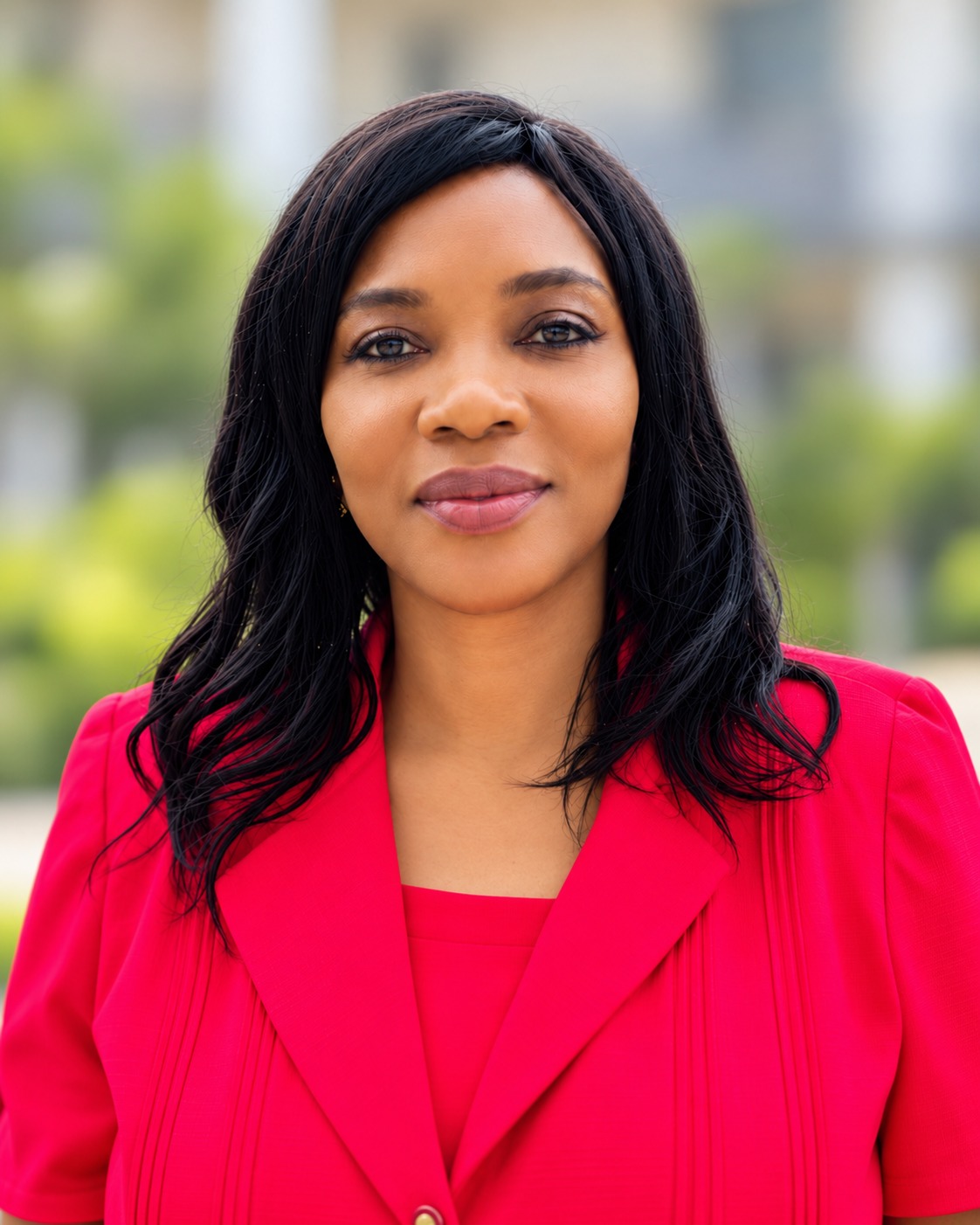
The Nigerian Society of Physical Sciences (NSPS) is pleased to celebrate 𝐃𝐫. 𝐎𝐥𝐮𝐰𝐚𝐤𝐞𝐦𝐢 𝐎𝐦𝐨𝐰𝐮𝐦𝐢 𝐄𝐟𝐞𝐦𝐞𝐧𝐚, our Spotlight Member of the Week.
From mapping geological formations in Nigeria's petroleum industry to uncovering the history of ancient environments preserved beneath the Earth's surface, Dr. Efemena's scientific journey reflects a remarkable connection between practical industry experience and academic research. Her career has taken her from interpreting geological and seismic information for petroleum exploration to investigating sedimentary basins, reconstructing ancient environments, and exploring how scientific research can support more sustainable management of natural resources. Throughout this journey, she has maintained a strong commitment to education, mentorship, and the development of young people.
Dr. Oluwakemi Omowumi Efemena is a geoscientist, researcher, and educator currently serving as a Lecturer at Redeemer's University, Ede, Osun State, Nigeria. Her expertise spans petroleum geology, sedimentology, stratigraphy, palynology, reservoir characterization, and subsurface geological interpretation. Her research focuses on understanding the formation and evolution of sedimentary basins, investigating the geological processes that influence resource distribution, and applying scientific knowledge to reduce uncertainties associated with subsurface exploration.
Dr. Efemena's academic journey began at Ondo State University, Ado-Ekiti, where she obtained her Bachelor of Science degree in Geology. She subsequently earned a master's degree in Petroleum Geology from the University of Nigeria, Nsukka, graduating as the Best M.Sc. Student in Petroleum Geology in 2014. Her determination to deepen her understanding of the Earth's subsurface led her to the University of Benin, where she completed her Ph.D. in Petroleum Geology. She also obtained a Postgraduate Diploma in Education, further strengthening her preparation for university teaching and academic mentorship.
An interesting part of her professional journey is that her experience with geological investigations began long before she entered university teaching. Working as a CAD Geological Cartographer with Shell Petroleum Development Company of Nigeria Limited through Fugro Survey Nigeria Limited, she gained practical experience preparing geological, seismic, topographical, and other technical maps used in petroleum-related investigations. This period exposed her to the importance of accurately interpreting geological information and understanding subsurface structures in resource exploration. The experience became a valuable foundation for her subsequent academic research, where she continued investigating the geological processes and sedimentary environments that influence the occurrence and distribution of natural resources.
One of the most fascinating aspects of Dr. Efemena's research is her ability to investigate environments that existed millions of years ago using evidence preserved in sedimentary rocks. While these rocks may appear ordinary at the surface, their mineral composition, sedimentary structures, and microscopic fossils contain information about ancient rivers, coastlines, vegetation, and marine conditions. By examining these geological records, she contributes to reconstructing the environmental history of sedimentary basins and understanding how their evolution influences present-day geological resources.
In a 2026 study published in Environment and Ecosystem Science, Dr. Efemena and her collaborators investigated shale deposits from the Dahomey Basin in southwestern Nigeria. Using palynological, palynofacies, and foraminiferal analyses, the researchers examined five shale samples and identified 99 species of microscopic organic remains, including fossil pollen and spores. Their findings revealed evidence of ancient terrestrial vegetation, freshwater influences, and occasional marine incursions. The study provided valuable information about the conditions under which the sediments accumulated and contributed to a better understanding of the basin's geological and environmental history.
Another significant contribution emerged from her collaborative research on the Patti Formation in Nigeria's southern Bida Basin, published in Discover Geoscience in 2025. The researchers examined 14 geological samples and identified 70 species of fossil pollen, spores, and other microscopic remains. Their analysis provided evidence that the studied sedimentary sequence dates to the Campanian–Maastrichtian period of the Late Cretaceous and developed under conditions influenced by both terrestrial and marine environments. By identifying these ancient environmental signatures, the research contributed to improving the geological interpretation of a sedimentary formation of considerable scientific and resource-exploration interest.
Her investigations have also extended to the Niger Delta, one of Africa's most important petroleum-producing regions. In a 2025 study published in the Proceedings of the Nigerian Society of Physical Sciences, Dr. Efemena and her collaborator examined a 111-metre sandstone–shale interval within the Tak-1 well. Using spectral gamma-ray measurements and geochemical interpretation, they investigated variations in potassium, uranium, and thorium to identify clay minerals and reconstruct ancient depositional conditions. Their findings indicated a geological environment influenced by changing sea levels, terrestrial sediment supply, and marginal marine processes. Such research provides useful insights into the geological characteristics of sedimentary formations and supports more informed interpretations of potential reservoir systems.
Through these investigations, Dr. Efemena has continued to contribute to scientific understanding of how sedimentary basins develop and how their geological characteristics influence natural resource exploration. Her work connects the practical experience she gained in petroleum-related geological mapping with detailed scientific investigations of rocks, fossils, and subsurface formations. She has also developed an interest in emerging data-driven approaches, including the application of machine learning to geological interpretation and reservoir characterization.
Beyond research, Dr. Efemena is deeply committed to teaching and developing young scientists. Before joining Redeemer's University, she served as a lecturer at Achievers University, Owo, where she participated in teaching, research supervision, and departmental administration. Her teaching experience covers petroleum geology, sedimentology, stratigraphy, geochemistry, mineral resources, and other areas of Earth sciences. Through classroom instruction, field-related learning, and research supervision, she encourages students to understand geological concepts and appreciate their practical relevance to environmental management and resource development.
Her contributions to academic development also include responsibilities in programme coordination, student advising, research supervision, and institutional administration. These experiences have provided opportunities to support students' academic progress, contribute to university development, and encourage greater participation in scientific research.
Outside her scientific and academic responsibilities, Dr. Efemena has shown a strong commitment to leadership development, mentorship, writing, and the empowerment of women and girls. She convened the 'This Girl Can' Forum, an initiative dedicated to empowering girls and young women through mentorship, confidence-building, and leadership development. Through this platform, she seeks to encourage young women to recognise their abilities, pursue meaningful ambitions, and develop the confidence needed to contribute positively to society.
Her passion for mentorship also extends to educational outreach, career guidance, and personal development programmes for young people. She has participated in initiatives designed to help students and young adults make informed career decisions, develop leadership skills, and discover their potential. These activities reflect her conviction that meaningful achievement involves not only personal advancement but also creating opportunities for others to grow.
Outside her professional commitments, Dr. Efemena enjoys reading, writing, gardening, singing, poultry keeping, and goat rearing. These interests provide opportunities for creativity, relaxation, and personal fulfilment, while reflecting her appreciation for learning and productive activities beyond the university environment.
Her personal philosophy places considerable importance on the positive influence individuals can have on others. As she expresses it:
“My success is measured not only by what I achieve, but by the lives I touch, the people I inspire, and the growth I help others achieve.”
Looking ahead, Dr. Efemena aspires to become a leading researcher in geosciences, advancing innovative and data-driven approaches to sustainable subsurface resource management. Her long-term scientific vision is to improve geological interpretation, reduce uncertainties in resource exploration, and promote responsible resource development that takes environmental sustainability into consideration. She is equally committed to mentoring young scientists and translating research findings into practical solutions for the energy and environmental sectors.
Her journey from geological mapping in the petroleum industry to advanced research and university teaching demonstrates how practical experience, academic determination, and scientific curiosity can contribute to a meaningful career. Whether she is investigating geological records, guiding students through research, or supporting the development of young women, Dr. Efemena continues to pursue opportunities to apply her knowledge and experience in ways that benefit the society.
We celebrate Dr. Oluwakemi Omowumi Efemena for her contributions to geoscientific research, particularly her investigations into sedimentary basin evolution, paleoenvironmental reconstruction, and sustainable subsurface resource exploration. We also recognise her commitment to scientific education, academic mentorship, women's empowerment, and leadership development