Imagine protecting Earth with a giant airbag—not on the ground, but in space. Researchers have proposed an ambitious concept designed to shield our planet from destructive solar superstorms. These powerful events occur when the Sun ejects enormous clouds of electrically charged plasma, known as coronal mass ejections (CMEs). While most CMEs produce spectacular auroras, the strongest can disrupt radio communications, damage satellites, overload power grids, expose astronauts to dangerous radiation, and even threaten global internet infrastructure.
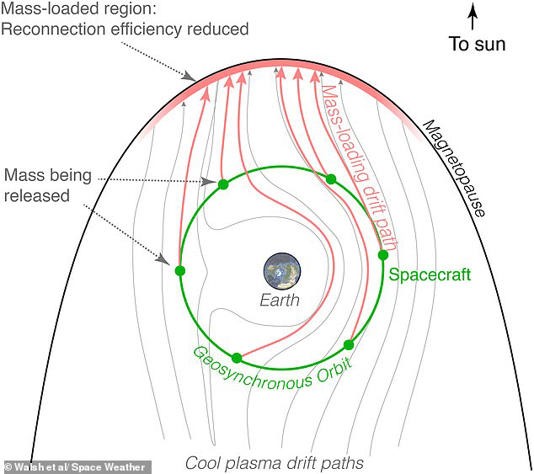
The proposed system would consist of six bus-sized satellites positioned about 36,000 kilometers (22,500 miles) above Earth. If a major solar storm were detected, the satellites would release gas that expands into a massive cloud of plasma along the outer edge of Earth's magnetic field. This artificial plasma cloud would serve as a protective barrier, intercepting and weakening the incoming charged particles before they reach the planet.
Researchers compare the concept to an automobile airbag: a protective system that remains inactive most of the time but deploys only when a serious threat is detected. According to their estimates, this space-based shield could reduce the intensity of an incoming solar superstorm by as much as 50%, significantly lowering the risk of widespread damage to the technologies that modern society depends on every day.
Although the idea remains theoretical and has not yet been built or tested in space, it represents an innovative approach to one of the greatest natural hazards facing our technological civilization. As the world becomes increasingly dependent on satellites, GPS navigation, communications networks, and electrical infrastructure, developing reliable space weather defense systems may become one of the most important engineering challenges of the future.