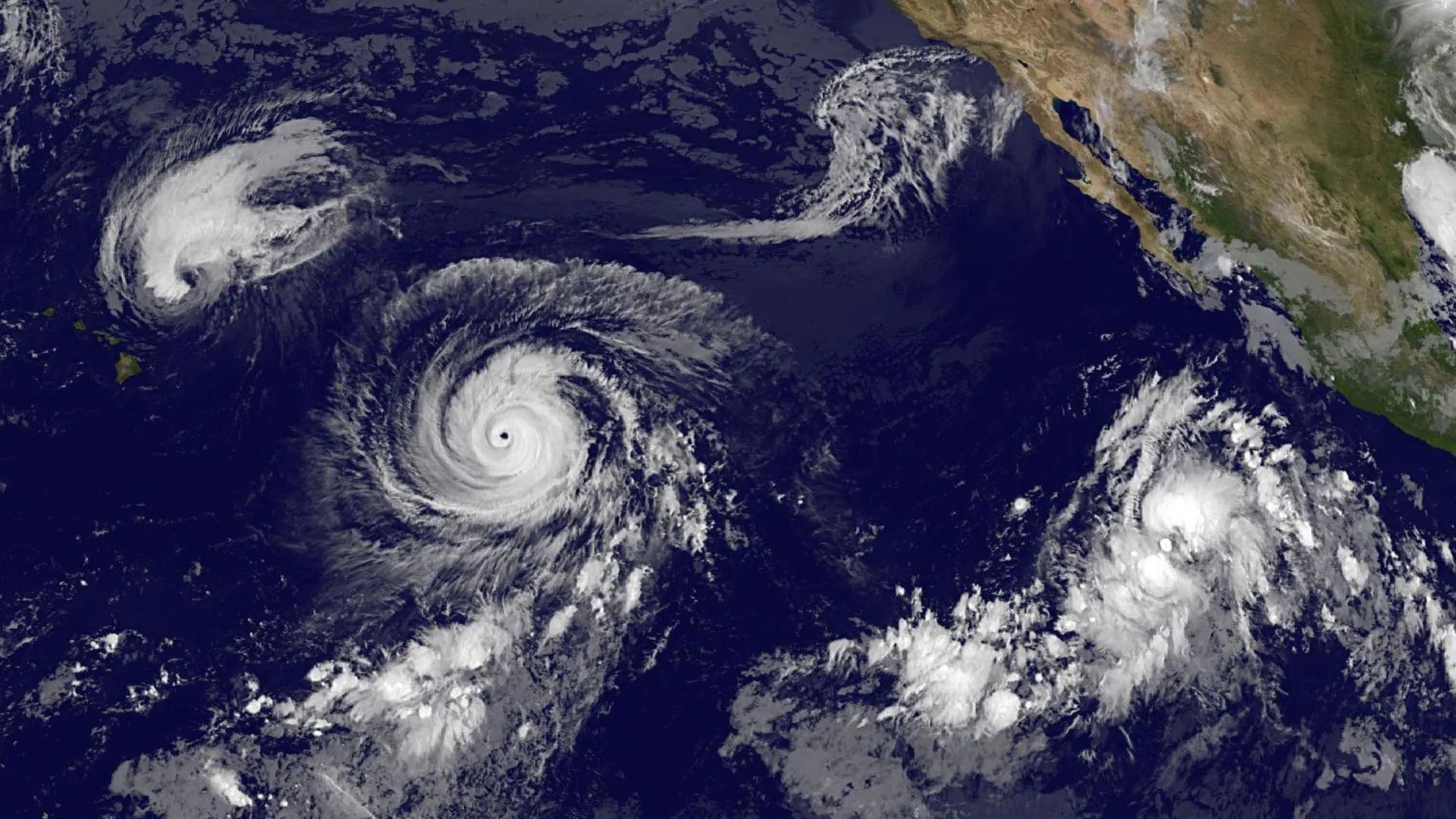
A proposed method for cooling the planet could unintentionally disrupt one of Earth’s most important climate systems, according to new research.
Scientists at the University of California, Santa Barbara studied how different geoengineering strategies might affect global climate patterns. Their findings suggest that one approach, known as marine cloud brightening, could strongly weaken the El Niño–Southern Oscillation, or ENSO, if used over the eastern Pacific Ocean.
ENSO is one of the planet’s most influential natural climate cycles. It affects rainfall, ocean temperatures, agriculture, storms, droughts, and weather patterns across many regions of the world. Disrupting it could therefore create serious and far-reaching consequences.
The study, published in Earth’s Future, shows that not all climate intervention strategies carry the same risks.
Why El Niño Is So Important
ENSO naturally shifts between El Niño and La Niña phases every few years. During El Niño, warmer waters move toward the eastern Pacific, often changing rainfall and storm patterns in many parts of the world. During La Niña, warm waters remain farther west, affecting monsoons, droughts, and ocean circulation differently.
Because this cycle influences weather across continents, even small changes to ENSO can have major effects. A sudden weakening of the system could alter rainfall, marine ecosystems, food production, and climate patterns on a global scale.
The researchers began by investigating how geoengineering could affect marine ecosystems. That question led them to examine ENSO because of its powerful role in shaping ocean and atmospheric conditions.
Two Climate Cooling Ideas Compared
The team compared two proposed geoengineering methods designed to reflect sunlight away from Earth.
The first method, marine cloud brightening, involves spraying sea salt particles into the lower atmosphere above the ocean. These particles help create clouds with smaller and more numerous droplets, making the clouds brighter and more reflective. In theory, this would cool the ocean surface by sending more sunlight back into space.
The second method, stratospheric aerosol injection, involves releasing sulfate particles much higher in the atmosphere. These particles spread more widely around the globe and reflect sunlight in a more uniform way.
Both methods are intended to reduce global warming, but the study found that their effects on ENSO are very different.
A Major Risk From Marine Cloud Brightening
The simulations showed that marine cloud brightening over the subtropical eastern Pacific could reduce ENSO’s strength by about 61%.
This was a surprisingly large effect. The researchers found that brightening clouds in this region would cool the ocean surface and reduce rainfall. These changes would then influence winds, evaporation, and ocean circulation across the tropical Pacific.
As the system shifts, stronger equatorial winds would bring more cold water up from below the ocean surface. This would further cool the region and weaken ENSO even more.
In other words, a geoengineering method meant to cool the planet could trigger a chain reaction that dramatically changes one of the world’s most important climate cycles.
The researchers emphasized that the danger is tied especially to using marine cloud brightening in the eastern Pacific. They are not saying that all marine cloud brightening would have the same outcome everywhere, but they warn that location matters greatly.
Why Stratospheric Aerosols Had Less Impact
By contrast, stratospheric aerosol injection had little effect on ENSO in the simulations.
The likely reason is that sulfate particles released into the stratosphere spread more evenly around the planet. This produces a broader cooling effect instead of strongly cooling one sensitive region. Because the cooling is less concentrated, it does not disturb the tropical Pacific climate system in the same way.
However, the researchers caution that this does not mean stratospheric aerosol injection is risk-free. It simply means that, in this study, it did not strongly disrupt ENSO.
Geoengineering Comes With Tradeoffs
The study highlights a major concern about geoengineering: reducing global temperature is not the only thing that matters. Two methods may cool the planet by similar amounts but still produce very different regional effects.
Climate intervention could influence rainfall, agriculture, ocean ecosystems, photosynthesis, and atmospheric circulation. It could also affect marine algae, which form the base of the ocean food chain and play a major role in oxygen production.
At the same time, doing nothing also carries risks, since continued climate change is expected to disrupt ecosystems, weather patterns, and human communities.
The researchers argue that this makes careful study essential. Geoengineering proposals must be evaluated not only by how much they reduce warming, but also by how they may alter Earth’s complex climate systems.
The findings serve as a warning that efforts to cool the planet could create unexpected consequences if deployed without a full understanding of the climate system.
Journal Reference:
Xing, C., Stevenson, S., Fasullo, J., Harrison, C., Chen, C., Wan, J., Coupe, J., & Pfleger, C. (2025). Subtropical Marine Cloud Brightening Suppresses the El Niño–Southern Oscillation. Earth’s Future, 13(8). https://doi.org/10.1029/2025EF006522