How can mathematical structures that represent both positive and negative information improve decision-making under uncertainty?
This study introduces bipolar soft neighborhood structures within soft set theory and examines their use in rough-set approximation, topology, and decision-making.
Bipolar soft sets describe objects through positive parameters and their corresponding negative attributes. This makes them useful for situations in which preferences, evidence, or evaluations contain both favourable and unfavourable information.
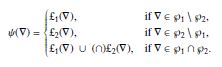
The researchers defined new lower and upper approximation operators based on binary bipolar soft relations and established several mathematical properties governing inclusion, union, intersection, reflexivity, symmetry, and transitivity.
They then developed eight types of bipolar soft neighborhoods, including right, left, intersection, union, and derived neighborhood forms. These structures provide different ways of describing the relationships surrounding each object in an information system.
The study also introduced bipolar soft neighborhood spaces and examined the relationships among their neighborhood types.
Using bipolar soft reflexive relations, the researchers generated and characterized new topological structures directly from the underlying neighborhoods. This approach offers a way to construct topologies without first defining conventional bases or subbases.
The resulting topologies were used to support rough-set approximations, providing a structured framework for managing incomplete, uncertain, or conflicting information.
To demonstrate its practical value, the method was applied to a decision problem involving six T-shirt options assessed through positive and negative attributes such as colourful or plain, sporty or classic, and cheap or expensive.
A choice-value algorithm combined the lower and upper bipolar soft approximations for each option. The third T-shirt achieved the highest score of 4 and was selected as the best option, while the second-ranked T-shirt was identified as the alternative choice.
The findings show that bipolar soft neighborhoods can transform paired positive and negative evaluations into an organized mathematical decision process.
This framework may support future applications in areas where choices depend on uncertain, incomplete, or opposing information, including product selection, classification, data analysis, and multi-criteria decision-making.
📖 Read the full article here:
https://doi.org/10.46481/jnsps.2026.3337
Published in: Journal of the Nigerian Society of Physical Sciences