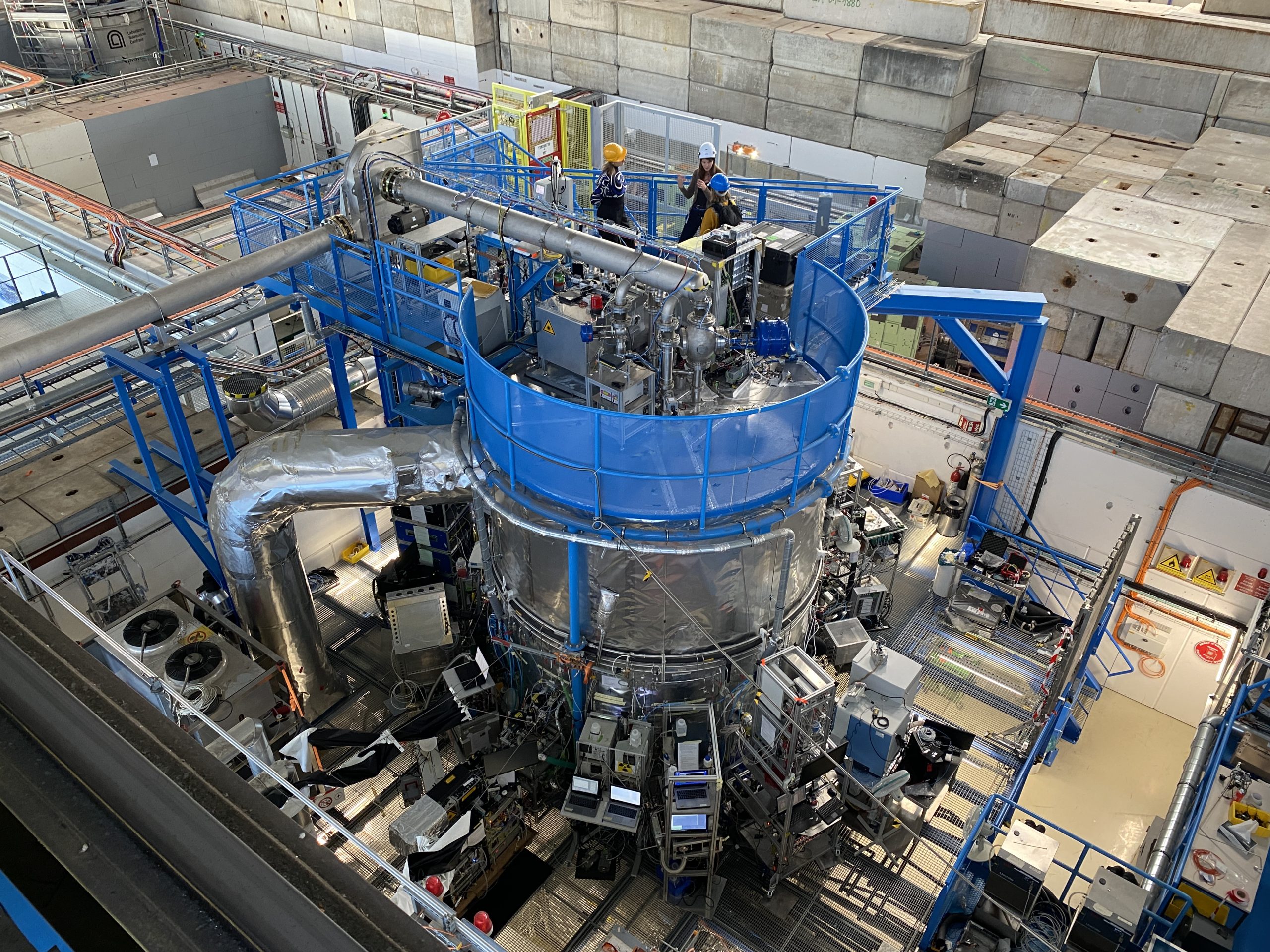
A new study from CERN’s CLOUD experiment suggests that the marine biosphere may be more capable of offsetting future reductions in human-made aerosols than scientists previously believed.
The findings, published in Nature by the CLOUD Collaboration, show that natural emissions from marine phytoplankton may be producing far more aerosol particles than current climate models have accounted for. This discovery could reshape scientists’ understanding of aerosols and cloud formation in both pre-industrial climates and future climates after fossil-fuel emissions have declined.
Cloud droplets form around tiny airborne particles known as aerosols. These particles may be solid or liquid, and when they grow larger than about 50 nanometres, they can act as cloud condensation nuclei, or CCN. These nuclei provide the surfaces on which water vapour condenses to form cloud droplets.
A higher number of aerosol particles can cool the climate in two important ways. First, the particles themselves can reflect sunlight back into space. Second, they can help create clouds made of smaller but more numerous droplets, making the clouds brighter and often increasing their coverage. Human activities, especially fossil-fuel burning, have produced large amounts of aerosol particles, and these are thought to have offset a significant portion of the warming caused by greenhouse gases.
More than half of the cloud condensation nuclei in the atmosphere are believed to originate through a process called nucleation, also known as new particle formation. This occurs when trace vapours in the atmosphere spontaneously condense to form new particles. Until now, sulphuric acid has been regarded as the most important vapour driving this process. Much of that sulphuric acid comes from sulphur dioxide released by fossil-fuel combustion.
However, atmospheric sulphur dioxide levels are now falling as a result of emission controls. This decline is beneficial for human health, but it also means that the concentration of human-made aerosol particles is expected to decrease. As these particles fall closer to pre-industrial levels, the loss of their cooling effect could contribute to additional warming later this century.
Jasper Kirkby, spokesperson for the CLOUD Collaboration, explains that most climate models currently focus mainly on sulphuric acid-driven nucleation. But he says it is essential to understand and properly include biological aerosol sources if scientists are to make reliable predictions about future climate and air quality.
Observations over the Southern Ocean and in the upper troposphere above the Atlantic and Pacific Oceans have already suggested that current models are missing a major source of marine aerosol particles. Until now, the identity of that missing source has remained unclear.
The new CLOUD results may provide the answer.
Marine phytoplankton release dimethyl sulphide, a sulphur-containing compound that accounts for around 20% of atmospheric sulphur. When dimethyl sulphide oxidizes in the atmosphere, it produces several compounds, including sulphuric acid and methanesulphonic acid, often at similar concentrations.
Sulphuric acid is already known to play a key role in forming new atmospheric particles. The role of methanesulphonic acid, however, has remained uncertain — until now.
To investigate this, the CLOUD Collaboration combined laboratory experiments with atmospheric modelling. The researchers studied particle formation involving methanesulphonic acid, as well as mixtures of methanesulphonic acid and sulphuric acid, in the presence of ammonia. They tested the reactions across a wide temperature range, from +10 °C down to -50 °C.
The results showed that below -10 °C, methanesulphonic acid can be just as effective as sulphuric acid at driving particle nucleation when ammonia is present. The researchers also found that methanesulphonic acid and sulphuric acid readily combine, producing a synergistic effect that enhances particle formation.
In addition, methanesulphonic acid was found to drive rapid particle growth at all temperatures below +10 °C, even when ammonia was almost absent. This is important because newly formed particles must grow quickly enough to avoid being removed from the atmosphere before they can become cloud condensation nuclei.
According to Kirkby, because methanesulphonic acid and sulphuric acid commonly coexist at similar concentrations in cool marine regions, the findings suggest that particle nucleation rates could be accelerated by up to ten times compared with sulphuric acid and ammonia alone. Particle growth rates could also increase by up to two times.
Model simulations from the study indicate that methanesulphonic acid-driven new particle formation may account for the major missing source of marine aerosol particles in current climate models.
The discovery builds on previous CLOUD findings showing that isoprene-driven particle formation is abundant in the upper troposphere over tropical rainforests. Together, these results suggest that the biosphere may play a stronger role in producing cloud-forming particles than previously recognized.
This has important implications for future climate projections. As sulphur dioxide emissions continue to fall because of air-quality controls, human-made aerosol particles are expected to decline. That reduction could weaken the aerosol cooling effect and contribute to further warming. But if natural biological sources produce more cloud condensation nuclei than expected, they may partially compensate for the loss of anthropogenic aerosols.
Gautier Hamel de Monchenault, CERN Director for Research and Computing, describes the work as an important step forward in understanding climate. He notes that improving knowledge of aerosols is crucial because biogenic cloud condensation nuclei can influence estimates of Earth’s climate sensitivity and projections of future warming.
The study does not suggest that natural aerosols will cancel out human-driven climate change. Instead, it highlights a previously underestimated natural process that could affect how clouds form over the oceans and how much cooling the atmosphere retains as pollution levels decline.
In essence, the CLOUD experiment has revealed that marine life may be shaping the atmosphere more powerfully than scientists realized. Tiny phytoplankton in the ocean release gases that can help form aerosol particles, seed clouds, and influence the planet’s energy balance, adding a major new piece to the climate puzzle.