How can complex equations that combine present change with a system’s past behaviour be solved more accurately and efficiently?
This study introduces a new computational method for solving second-kind Volterra integro-differential equations, which are widely used to model problems in engineering, physics, biology, heat conduction, population dynamics, viscoelasticity, and control systems.
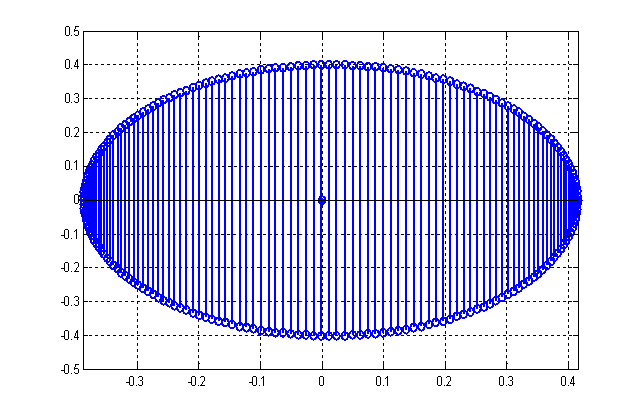
The proposed method combines interpolation and collocation techniques to produce a continuous one-step computational scheme. Its mathematical properties were carefully examined through consistency, zero-stability, convergence, order of accuracy, and absolute stability analyses.
The method was shown to have fifth-order accuracy, while also satisfying the conditions required for consistency, stability, and convergence.
Numerical experiments were conducted on selected Volterra integro-differential equations and compared with established methods, including the Adams–Bashforth–Moulton predictor–corrector method, block methods, the Haar wavelet method, trigonometrically fitted schemes, and trapezoidal approaches.
The results revealed exceptionally close agreement between the computed and exact solutions. In several test cases, the new method produced errors as small as 10⁻¹⁸ and outperformed many existing numerical techniques in accuracy and stability.
The study demonstrates that the proposed computational method is a reliable and efficient tool for solving both linear and nonlinear integro-differential systems, particularly where analytical solutions are difficult or unavailable.
This research contributes to computational mathematics, numerical analysis, applied modelling, stability theory, and the accurate simulation of complex systems with memory effects.
📖 Read the full article here:
https://doi.org/10.46481/asr.2026.5.2.476
Published in: African Scientific Reports