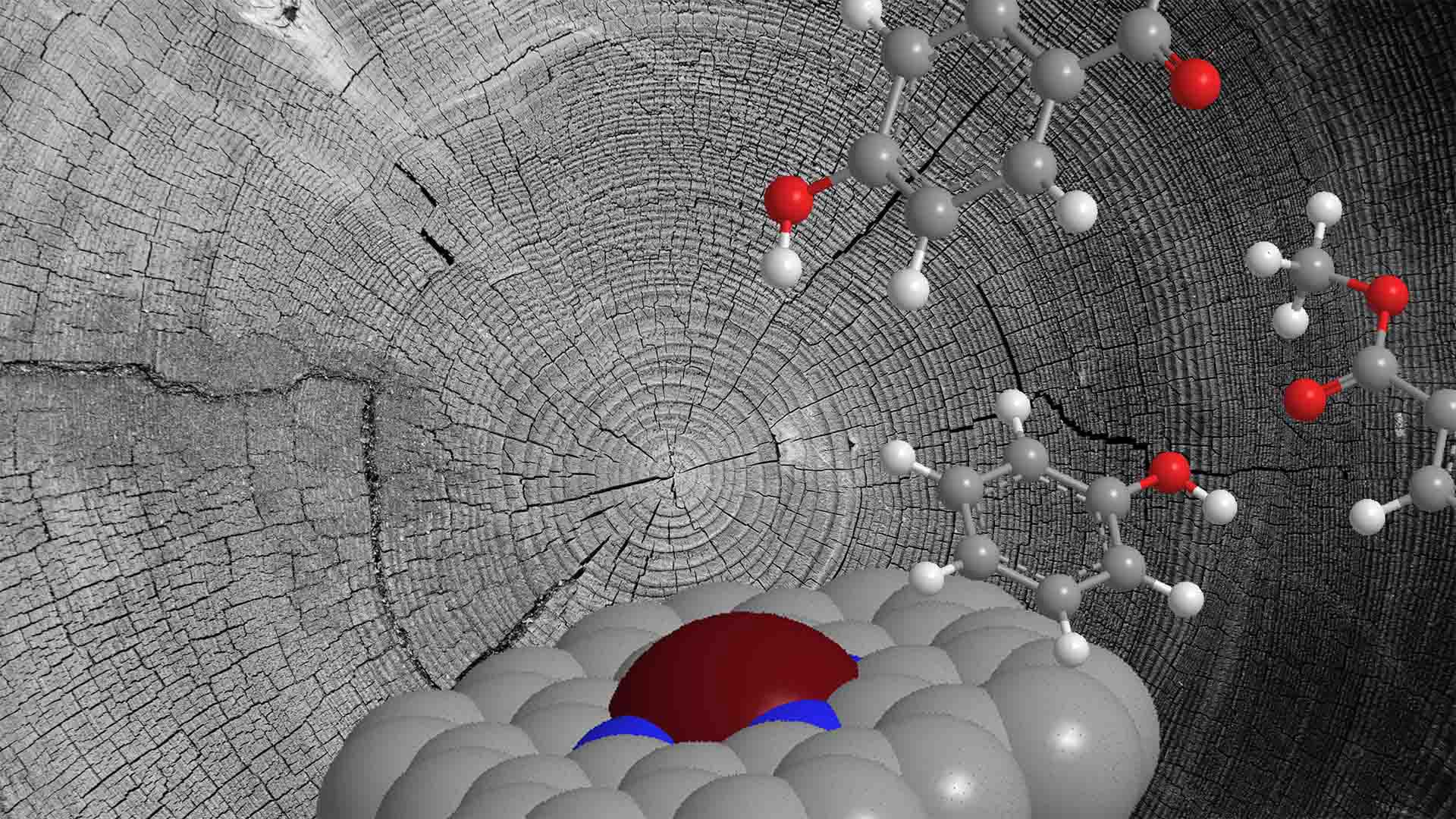
Scientists have developed a new catalyst that can help convert tough plant waste into useful chemicals, offering a possible route toward more sustainable fuels, plastics, and industrial materials.
The research, involving scientists from the University of Manchester and international collaborators, focuses on lignin, a strong natural material found in wood, stems, and other plant tissues. Lignin helps plants stay firm and upright, but it is also one of the most difficult parts of biomass to break down.
Agriculture and forestry produce large amounts of leftover plant material every year, and lignin can make up as much as 35% of this waste. It is also the largest renewable source of aromatic chemicals in nature. These chemicals are important building blocks for many products that are currently made from petroleum.
However, lignin’s strength comes from a complex network of tough chemical bonds. These bonds make it resistant to normal processing, limiting its use as a practical source of valuable chemicals.
To overcome this challenge, the researchers designed a single-atom catalyst. This type of catalyst contains individual metal atoms rather than larger metal particles. In this study, isolated ruthenium atoms were anchored in a nitrogen-containing carbon structure.
Because the ruthenium atoms are separated one by one, more of the metal is available to take part in the reaction. This improves efficiency while reducing the amount of metal needed.
The team identified a specific atomic arrangement called a Ru–N₄ site as the key reaction center. In this structure, a single ruthenium atom is surrounded by nitrogen atoms. This site helps activate oxygen, making it reactive enough to attack lignin’s strong carbon–oxygen and carbon–carbon bonds.
The researchers combined laboratory experiments with computer modeling to understand the process step by step. Their results showed that the catalyst first activates oxygen, then uses the reactive oxygen species to cut lignin into smaller and more useful molecules.
Under optimized conditions, the catalyst converted nearly all of the model lignin compounds tested. It also produced high yields of valuable chemicals, including phenol, an important aromatic compound used in making many industrial materials.
Importantly, the reaction worked under relatively mild conditions, avoiding the need for harsh chemical treatments. This could help reduce energy use, chemical waste, and environmental impact in future biomass processing.
The researchers also tested the catalyst on real lignin samples from different biomass sources. Despite lignin’s complex structure, the catalyst successfully converted the material into useful aromatic compounds.
These products could eventually serve as renewable starting materials for fuels, plastics, and other chemicals now commonly made from fossil resources.
By revealing the active atomic structure and explaining how the catalyst works, the study provides a guide for designing better catalysts in the future. It shows how atomic-level understanding can help turn difficult plant waste into valuable products.
If developed further, this approach could support a more circular economy by transforming agricultural and forestry waste into renewable chemical resources instead of relying heavily on petroleum.
Journal Reference:
Zhao, Y., Zhao, Y., Zhou, X., Guo, H., Yin, Q., Jiang, Y., He, H., Liu, N., Ren, G., Parlett, C. M. A., & Li, C. (2026). Unveiling the Role of Ru–N₄ on Ru–N–C Single-Atom Catalyst in C–O/C–C Bonds’ Oxidative Cleavage in Lignin. ACS Catalysis. https://doi.org/10.1021/acscatal.5c08001