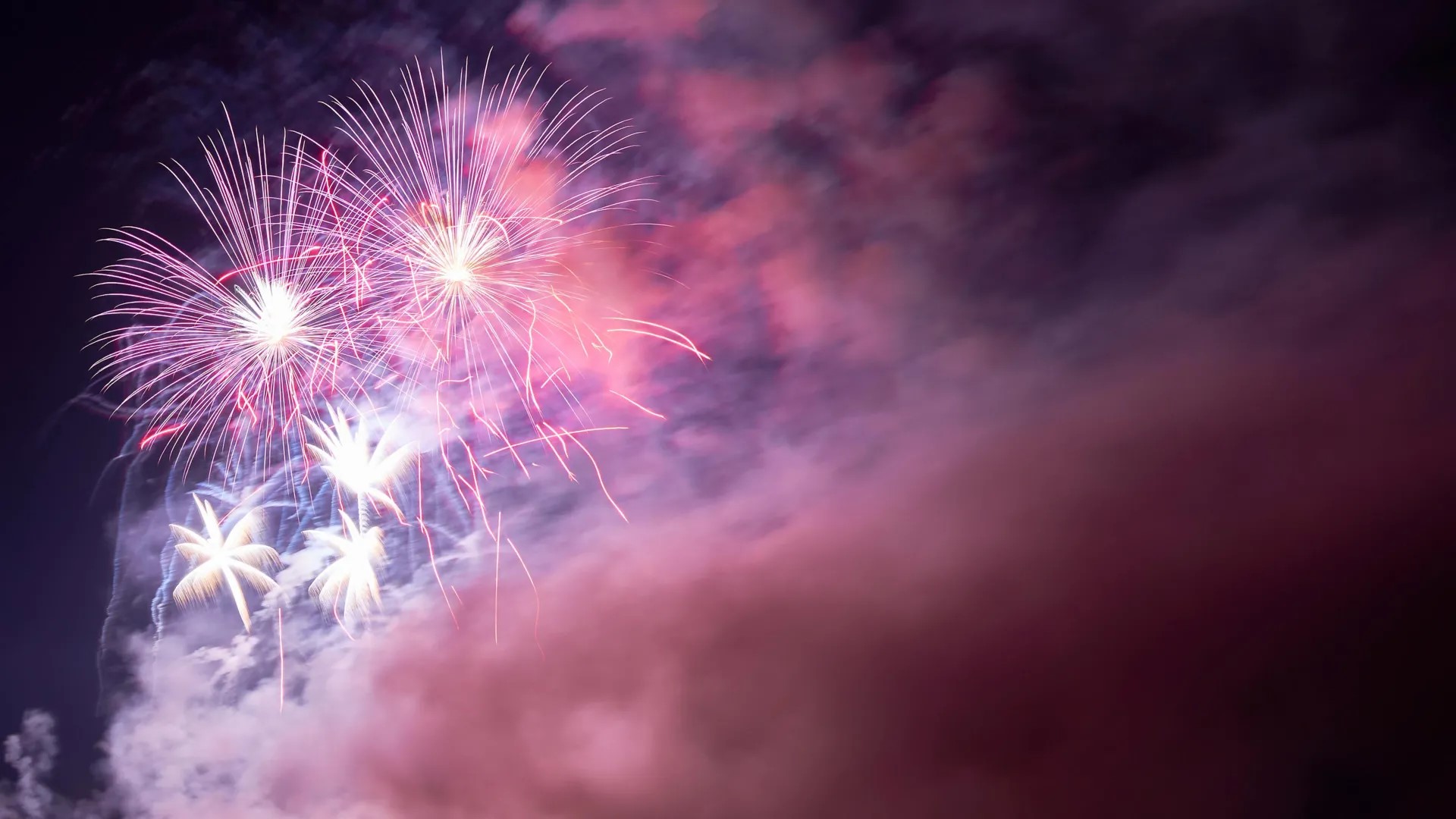
Fireworks may brighten the night sky with colourful displays, but new research shows that their environmental impact can continue long after the final explosion fades.
Three recent studies published in journals of the American Chemical Society examined the pollution linked to fireworks, including leftover debris, fine airborne particles, and chemicals released into the atmosphere. Together, the studies show that fireworks can affect air quality, water chemistry, ecosystems, and human exposure to pollution during major celebrations.
Firework Debris Can Change Water Chemistry
After fireworks are set off, they leave behind burned fragments, packaging materials, metal salts, fuel residues, and other chemical leftovers. When this debris enters rivers, lakes, or other water bodies, it can alter the chemistry of the water.
In one laboratory study, researchers found that spent firecracker residue released metal ions such as potassium and manganese, as well as dissolved organic compounds, into lake and river water. These substances included simple phenols and sulfur-containing compounds.
At the same time, the remaining solid debris absorbed some dissolved materials already present in the water. This means firecracker waste can both release new chemicals and remove existing ones, changing the balance of dissolved organic matter in aquatic environments.
The researchers warned that repeated washing of firework litter into waterways after festivals or public celebrations could disturb microbial communities and affect aquatic ecosystems. Proper cleanup and disposal of firework debris may help reduce these impacts.
Fireworks Add to Air Pollution at Large Events
Another study looked at air quality during a large multi-day sporting event in the United Kingdom. Scientists monitored particulate matter and found short but sharp increases in airborne particles during the event.
Much of the pollution came from sources such as food vendors, cooking emissions, vehicle movement, and dust raised by crowds. However, during the opening and closing ceremonies, the researchers observed clear spikes in fine particulate matter linked to fireworks displays.
Fine particles are especially concerning because they can travel deep into the lungs when inhaled. The study estimated that people who attended the event every day were exposed to air pollution levels above the limits recommended by the World Health Organization.
This finding suggests that fireworks, when combined with other activities at large public gatherings, can significantly increase short-term exposure to air pollution.
Fireworks Release More Than Visible Smoke
A third study focused on amines, a group of chemicals used in some firework formulations. These compounds can react in the atmosphere and contribute to the formation of aerosols, haze, and reduced air quality.
Researchers measured amines in both gas and particle form during Lunar New Year celebrations in a suburban area of China. They found that several amines increased sharply during periods of major fireworks activity.
The study also recorded higher levels of other firework-related pollutants, including fine particulate matter, sulfate, and potassium ions. These results show that fireworks release more than visible smoke; they also contribute chemical compounds that can remain in the air and affect atmospheric quality.
Why the Findings Matter
The studies highlight that fireworks can have hidden environmental costs. Beyond noise and smoke, they can leave chemical residues in water, increase fine particle pollution in the air, and release compounds that may contribute to haze.
While fireworks remain important in many cultural and public celebrations, the findings suggest the need for better waste management, improved event planning, and safer alternatives that reduce environmental harm.
The research shows that the beauty of fireworks comes with pollution that may linger in the air, water, and surrounding environment long after the celebration ends.
Journal References:
Chen, G.-L., Du, M., Qian, C., & Yu, H.-Q. (2026). Molecular-Level Perturbations of Dissolved Organic Matter Driven by Episodic Firecracker Residue Leaching. Environmental Science & Technology, 60(22), 16168. https://doi.org/10.1021/acs.est.6c01478
Acton, W. J. F., Lalchandani, V., Du, M., Hou, S., Srivastava, D., Shi, Z., & Bloss, W. J. (2026). The Impact of Hospitality on Air Quality at a Major Sporting Event. ACS ES&T Air, 3(2), 279. https://doi.org/10.1021/acsestair.5c00142
Gui, L., Xu, Y., Ma, Y.-J., Yang, T., Xiao, H.-W., Xiao, H., & Xiao, H.-Y. (2025). Firework Display Is a Newly Identified Source of Gaseous and Particulate Amines. Environmental Science & Technology Letters, 12(10), 1387. https://doi.org/10.1021/acs.estlett.5c00806