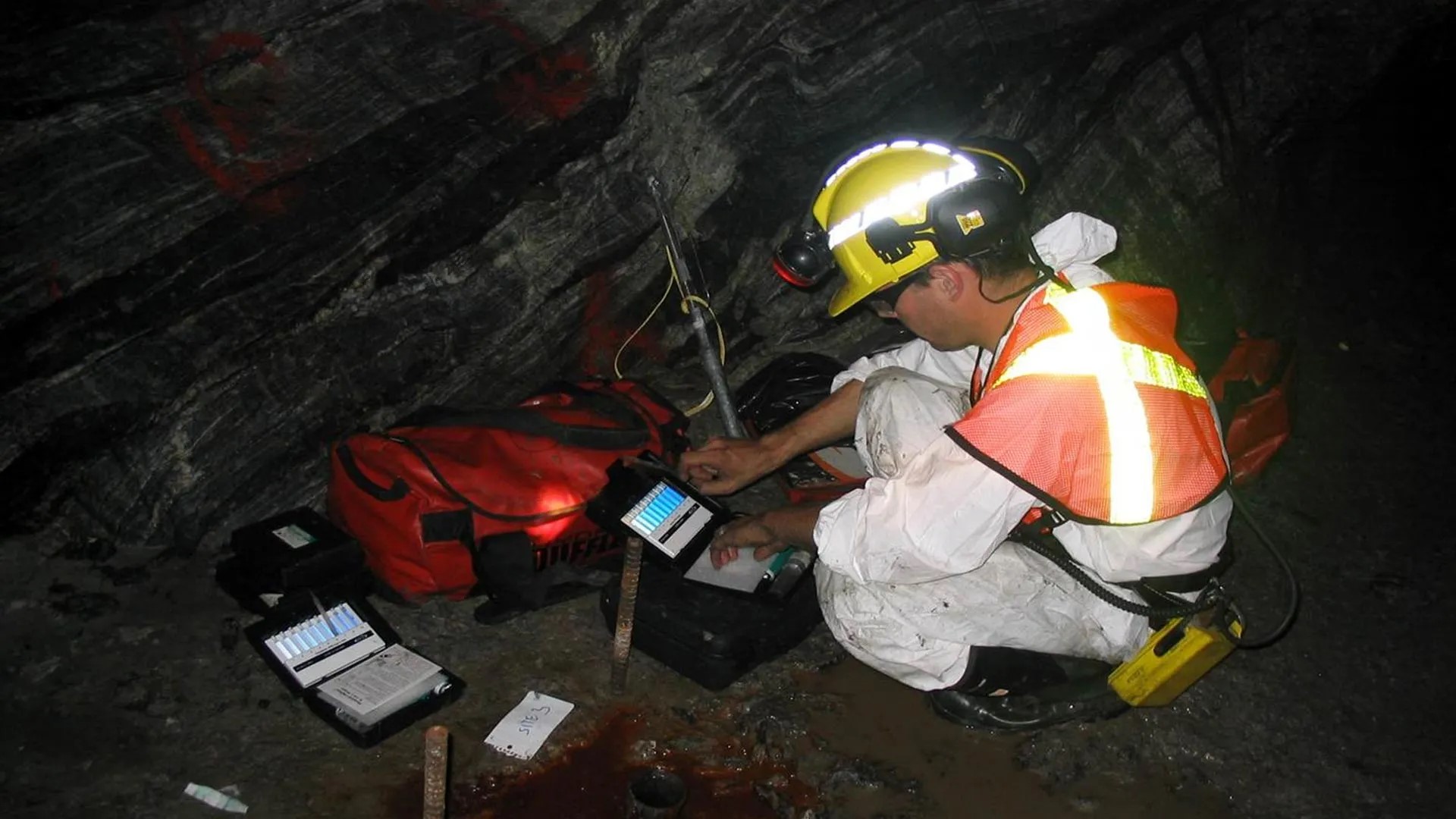
Scientists have found new evidence that ancient rocks deep beneath Canada are naturally producing hydrogen gas, raising hopes for a cleaner energy source hidden underground.
Researchers from the University of Toronto and the University of Ottawa studied the Canadian Shield, a vast region made up of some of the oldest rocks on Earth. Their work shows that these billion-year-old rocks are releasing hydrogen continuously, suggesting that natural or “white” hydrogen could become an important future energy resource.
The findings, published in the Proceedings of the National Academy of Sciences, provide one of the clearest real-world measurements yet of hydrogen naturally forming and flowing from Earth’s crust.
Hydrogen Flow Found in Ontario Mine Boreholes
The research team collected long-term measurements from an active mine near Timmins, Ontario. They discovered that boreholes drilled into the rock release an average of about 0.008 tonnes of hydrogen per year, equal to around 8 kilograms.
Although that amount may seem small for a single borehole, the gas can continue flowing for many years. When the researchers considered the mine’s nearly 15,000 boreholes, they estimated that the site could produce more than 140 tonnes of hydrogen annually.
That amount of hydrogen could generate about 4.7 million kilowatts of energy per year, enough to supply the yearly energy needs of more than 400 homes.
According to lead author Barbara Sherwood Lollar, the study points to a major untapped opportunity: clean energy produced naturally from rocks beneath the ground. She noted that this could provide Canada with a domestic energy resource capable of supporting industries and reducing dependence on imported fossil fuels.
Why Natural Hydrogen Is Important
Hydrogen is already used widely in industries such as fertilizer production, methanol manufacturing, and steelmaking. However, most hydrogen today is produced from fossil fuels, including natural gas, coal, and petroleum. These methods consume large amounts of energy and release greenhouse gases.
Even green hydrogen, which is made using renewable electricity, can be expensive and requires major infrastructure for production, storage, and transport.
Natural hydrogen is different because it forms underground through chemical reactions between rocks and groundwater. If it can be collected economically, it may provide a cleaner and potentially cheaper source of hydrogen.
Until recently, scientists had limited direct evidence of how much hydrogen Earth’s crust could produce. This new study helps close that gap by showing that hydrogen can accumulate and flow steadily from ancient rocks over long periods.
Ancient Rocks as Hydrogen Factories
The Canadian Shield contains minerals and rock types that can naturally generate hydrogen over time. Similar rocks are found in other parts of the world, meaning the discovery could have global significance.
The researchers found that hydrogen-rich regions often overlap with mining areas, including parts of Northern Ontario, Quebec, Nunavut, and the Northwest Territories. These regions are already important for minerals such as nickel, copper, diamonds, lithium, helium, chromium, and cobalt.
Study co-author Oliver Warr explained that the same rocks linked to these valuable mineral deposits can also produce natural hydrogen. This connection could make hydrogen especially useful for mining operations because the gas may be produced close to where it is needed.
A Cleaner Energy Option for Mines and Remote Communities
Natural hydrogen could help reduce the cost and carbon footprint of mining, especially in remote areas where transporting fuel is expensive. If hydrogen can be sourced locally, it may reduce the need for long-distance fuel delivery, storage systems, and large new energy infrastructure.
The discovery may also benefit northern communities, where energy costs are often high because fuel must be transported over long distances. Locally available hydrogen could provide a cleaner and more reliable energy option.
The researchers say their findings could guide future exploration for natural hydrogen in Canada and around the world. As countries search for ways to reduce emissions and expand clean energy supplies, white hydrogen may become an important part of the global energy transition.
Journal Reference:
Sherwood Lollar, B., & Warr, O. (2026). Decadal record of continental H₂ reservoirs reveals potential for subsurface microbial life and natural H₂ exploration. Proceedings of the National Academy of Sciences, 123(21). https://doi.org/10.1073/pnas.2603895123