Scientists are testing two promising technologies that could help destroy PFAS, the stubborn pollutants widely known as “forever chemicals.”
Researchers at the Helmholtz-Zentrum Dresden-Rossendorf are studying new methods for breaking down per- and polyfluoroalkyl substances, or PFAS, in contaminated water. These chemicals are used in many industrial products and are extremely difficult to remove because they resist natural breakdown and many conventional treatment methods.
PFAS are called forever chemicals because they contain very strong carbon-fluorine bonds, among the toughest bonds in organic chemistry. This makes them highly persistent in the environment. They can enter rivers, lakes, groundwater, and oceans through wastewater, and some PFAS have been linked to possible health and ecological risks.
The researchers are focusing on destroying PFAS rather than simply filtering or moving them elsewhere. Their two approaches use collapsing vapor bubbles and cold atmospheric plasma to attack the chemicals directly.
Using Collapsing Bubbles to Break PFAS Apart
The first method is called hydrodynamic cavitation. In this process, PFAS-contaminated water is forced through a narrow section, creating tiny vapor bubbles. Long-chain PFAS molecules tend to gather on the surface of these bubbles.
When the bubbles move into a higher-pressure region, they collapse violently. This collapse produces extremely high local temperatures and reactive molecules, creating conditions strong enough to begin breaking PFAS apart.
The researchers tested this method using PFOS, one of the most persistent and well-studied PFAS compounds. Their results showed that cavitation could degrade PFOS in tap water and release fluoride, an important sign that the carbon-fluorine bonds were being broken.
By the end of the test, the process degraded about 37% of the dissolved PFOS molecules. The team is now working to improve the method, aiming for much higher degradation and fluorine mineralization rates.
Cold Plasma Offers a Faster Route
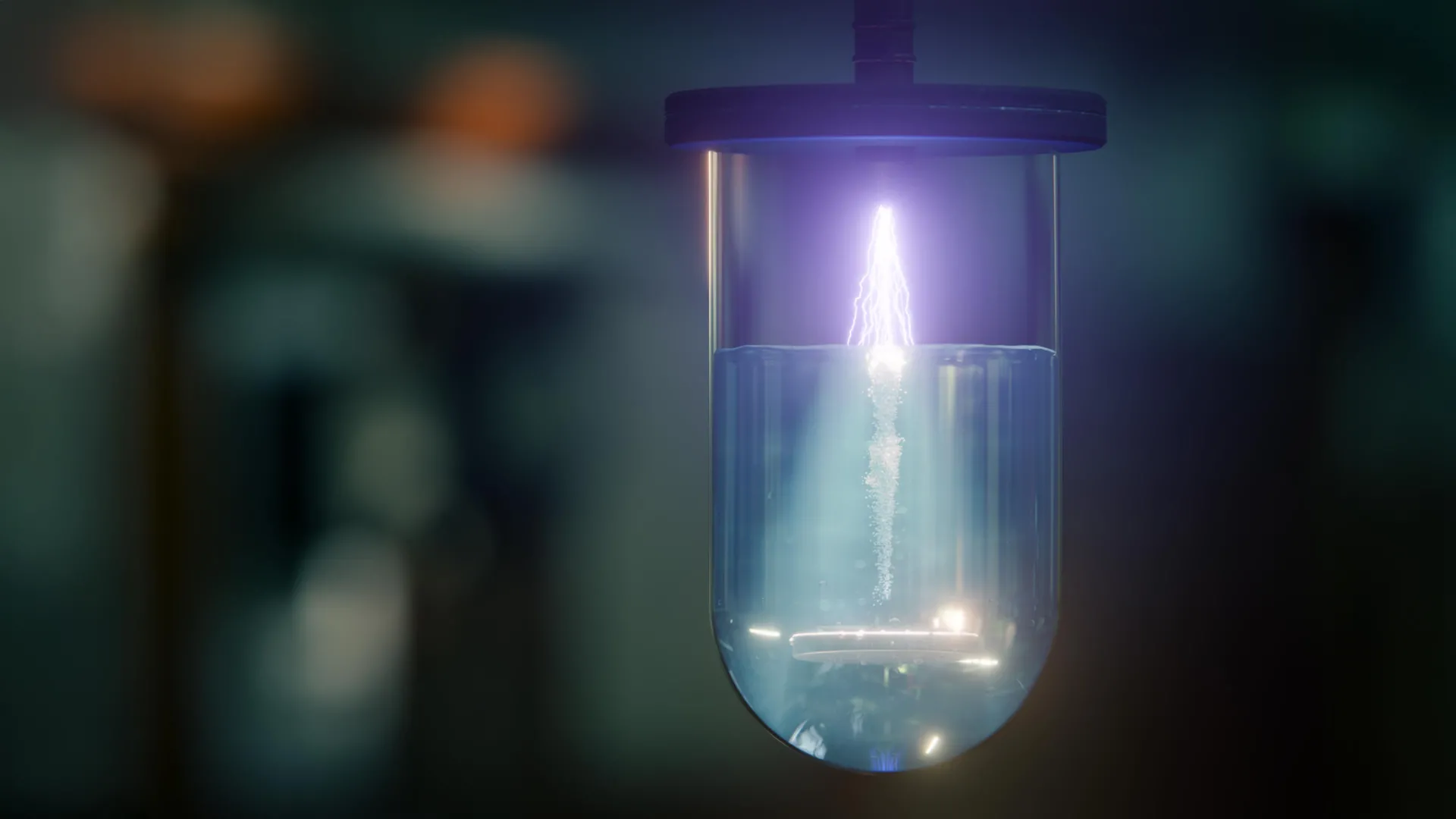
The second approach combines cold atmospheric plasma with gas bubbles. Plasma creates highly reactive chemical species that can attack pollutants. In this system, gas is introduced into contaminated water while plasma is generated at the surface.
PFAS molecules attach to the rising gas bubbles and are carried to the surface, where the plasma breaks them down.
This method worked faster than cavitation and nearly completely degraded both long-chain and short-chain PFAS in the experiments. It also released about 35% of the fluorine atoms originally bound in the chemicals, turning them into fluoride salts.
However, the plasma method uses more energy and can produce transformation products that still need to be carefully studied. Researchers are now investigating whether any of these by-products could pose health or environmental risks.
Combining Both Technologies
The research team hopes to combine the strengths of both approaches. Cavitation creates intense physical and chemical conditions inside collapsing bubbles, while plasma produces powerful reactive species at the water surface.
By bringing the two methods together, scientists believe they may achieve higher PFAS destruction rates and create a more efficient water-treatment system.
The team is also scaling up the plasma process, increasing the treated water volume from about 50 millilitres to five litres using multiple electrodes and improved gas injection.
If successful, these technologies could help industries treat PFAS-contaminated wastewater before it reaches the wider environment. This would be an important step toward reducing the spread of forever chemicals in water systems.
The findings show that PFAS pollution may not be impossible to tackle. With the right combination of physics, chemistry, and engineering, scientists may be getting closer to destroying some of the world’s most persistent pollutants.
Journal References:
Kumar, A., Huaccallo-Aguilar, Y., Kryk, H., Hampel, U., & Reinecke, S. F. (2026). Enhanced degradation and defluorination of perfluorooctane sulfonate (PFOS) in tap water using gas-dispersed cold atmospheric plasma. Scientific Reports, 16(1). https://doi.org/10.1038/s41598-026-57490-6
Kumar, A., Georgi, A., Huaccallo-Aguilar, Y., Meier, M., Kryk, H., Reinecke, S. F., & Hampel, U. (2026). Degradation and defluorination of perfluorooctane sulfonate (PFOS) forever chemical in water using hydrodynamic cavitation treatment. Chemical Engineering Journal Advances, 25, 101046. https://doi.org/10.1016/j.ceja.2026.101046