Scientists have successfully generated electricity using a hydrogen turbine powered by controlled detonation waves, opening a new path toward cleaner and more efficient energy systems.
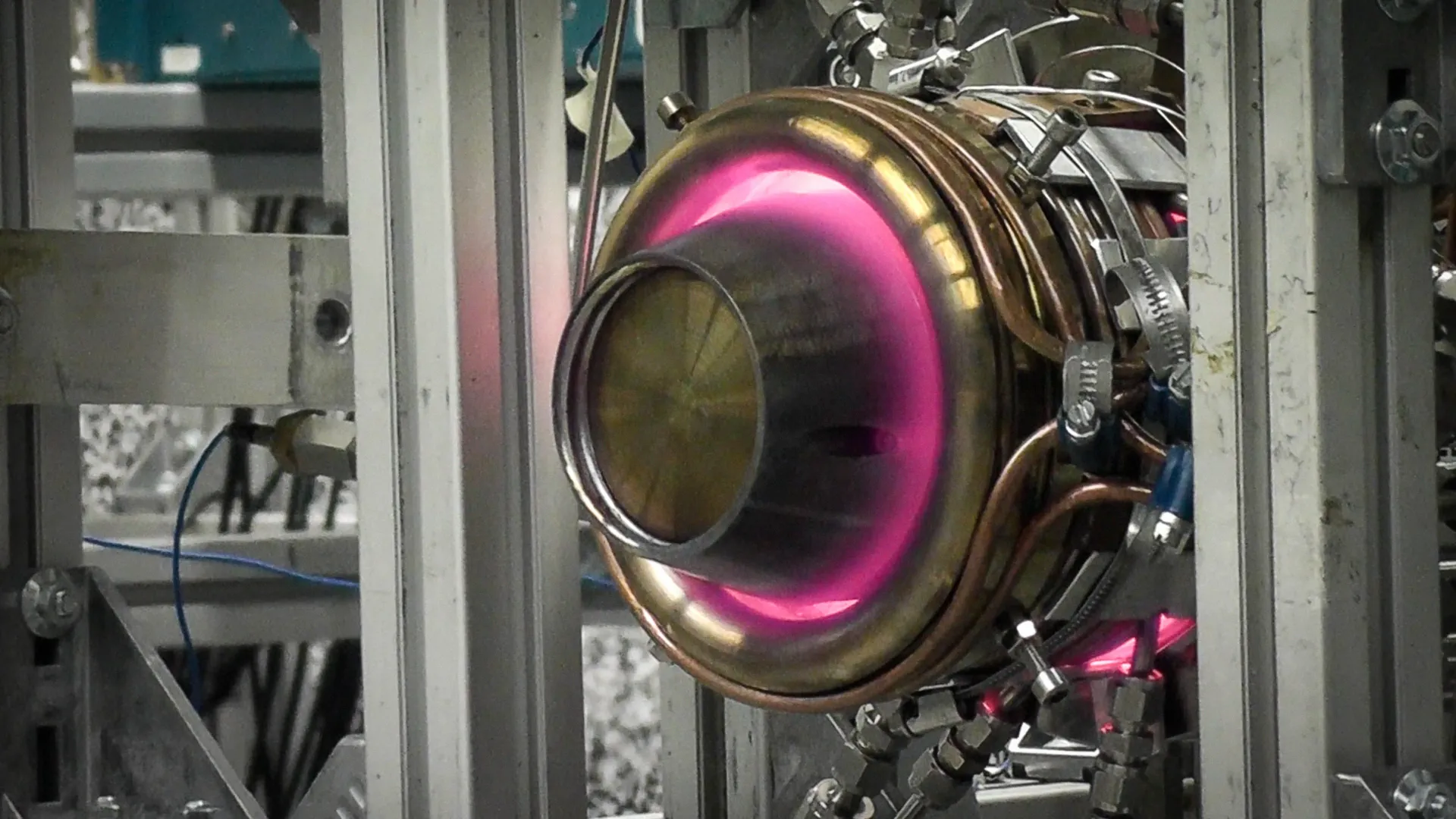
Researchers at the Karlsruhe Institute of Technology have developed a compressor-free gas turbine that uses hydrogen combustion to create its own pressure. In a recent test, the turbine operated for 303 seconds, setting a new record and surpassing NASA’s previous 250-second benchmark.
The breakthrough is important because conventional gas turbines require mechanical compressors to pressurize air before combustion. This compression process can consume about half of the turbine’s power, reducing the amount of energy available for electricity generation.
The new KIT design avoids that limitation by using pressure-gain combustion. Instead of relying on a compressor, the system produces pressure directly inside the combustion chamber through detonation waves.
These detonation waves are controlled, rapid combustion processes that move through the gas mixture and generate pressure. In the KIT turbine, they arise from wave and vortex patterns inside the flowing gases, allowing the system to operate without a mechanical compressor.
Removing the compressor could make future turbines more efficient, lighter, less complex, and less energy-intensive.
Hydrogen is especially suitable for this technology because it reacts quickly and can generate stable pressure increases. Since hydrogen can also be produced from renewable energy sources, the system could support fossil-free power generation.
Earlier versions of similar experimental systems could only operate for fractions of a second because the combustion chambers risked melting during longer runs. The new test extended operation to more than five minutes, showing that the design can remain stable for a much longer period.
The KIT team also became the first to generate electricity using a hydrogen gas turbine that does not depend on a mechanical compressor. This was a major engineering challenge because the combustion process is extremely fast and intense, making it difficult to transfer energy smoothly to the turbine.
By successfully connecting the combustion chamber to a turbine and converting the process into electricity, the researchers demonstrated that compressor-free hydrogen turbines could become a practical technology.
The approach could eventually support highly efficient power plants and, in the longer term, cleaner aviation systems. A turbine without a heavy compressor may reduce energy losses and improve performance in applications where weight and efficiency are critical.
The development marks an important step toward flexible hydrogen-based energy systems that could help reduce dependence on fossil fuels.
Source:
Karlsruhe Institute of Technology (KIT). “This hydrogen turbine turns controlled explosions into electricity.” Published August 4, 2026.