A person can appear healthy while hepatitis gradually damages the liver.
Every year, World Hepatitis Day reminds us of an important truth: 𝐭𝐡𝐞 𝐥𝐢𝐯𝐞𝐫 𝐢𝐬 𝐞𝐬𝐬𝐞𝐧𝐭𝐢𝐚𝐥 𝐭𝐨 𝐥𝐢𝐟𝐞, 𝐲𝐞𝐭 𝐡𝐞𝐩𝐚𝐭𝐢𝐭𝐢𝐬 𝐜𝐚𝐧 𝐝𝐚𝐦𝐚𝐠𝐞 𝐢𝐭 𝐬𝐢𝐥𝐞𝐧𝐭𝐥𝐲 𝐟𝐨𝐫 𝐲𝐞𝐚𝐫𝐬.
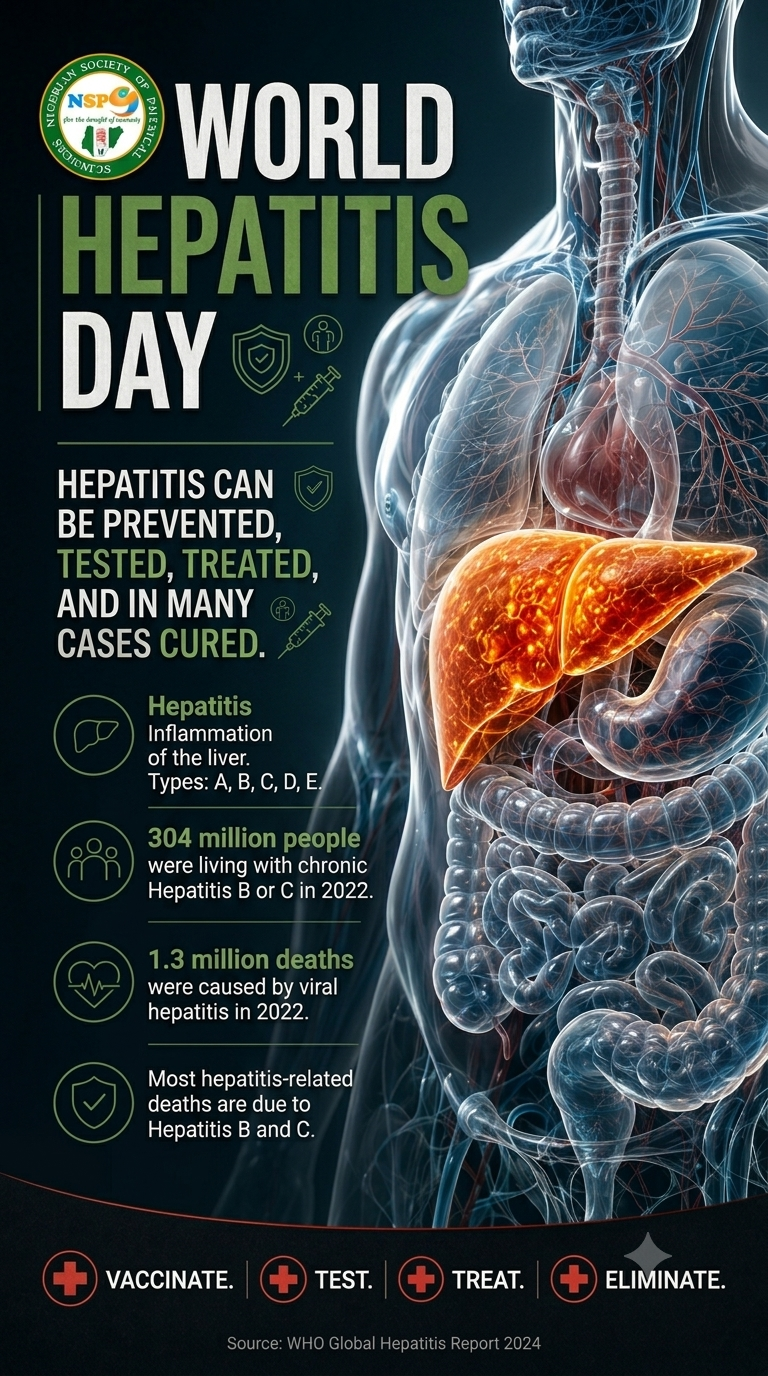
Hepatitis is inflammation of the liver. It may have several causes, but viral infections are among the most common. The five main hepatitis viruses are A, B, C, D, and E Although each can affect the liver, hepatitis B and C are responsible for most chronic infections and may lead to serious complications, including liver cirrhosis, liver failure, and liver cancer.
What makes viral hepatitis particularly dangerous is its often silent progression. Many people live with chronic hepatitis B or C without knowing they are infected because symptoms may not appear until significant liver damage has occurred.
When symptoms develop, they may include fatigue, loss of appetite, nausea, abdominal discomfort, dark urine, jaundice, and general weakness. However, symptoms alone cannot confirm hepatitis. Testing is essential for accurate diagnosis and timely medical care.
According to the WHO Global Hepatitis Report 2024, an estimated 304 million people were living with chronic hepatitis B or C in 2022, while viral hepatitis caused approximately 1.3 million deaths in the same year. Most of these deaths were associated with hepatitis B and C.
Nigeria also carries a substantial share of this global burden. The WHO Global Hepatitis Report 2024 estimated that approximately 15.7 million people in Nigeria were living with hepatitis B or C in 2022. Nigeria was also listed among the ten countries accounting for nearly two-thirds of the global burden of hepatitis B and C.
These figures show that viral hepatitis remains a major global health challenge. However, much of its burden can be reduced through vaccination, safer healthcare practices, early testing, appropriate treatment, and access to reliable health information.
𝐔𝐧𝐝𝐞𝐫𝐬𝐭𝐚𝐧𝐝𝐢𝐧𝐠 𝐭𝐡𝐞 𝐅𝐢𝐯𝐞 𝐌𝐚𝐢𝐧 𝐇𝐞𝐩𝐚𝐭𝐢𝐭𝐢𝐬 𝐕𝐢𝐫𝐮𝐬𝐞𝐬
𝐇𝐞𝐩𝐚𝐭𝐢𝐭𝐢𝐬 𝐀 is commonly transmitted through contaminated food or water. It usually causes an acute infection and does not ordinarily become chronic. Vaccination is available.
𝐇𝐞𝐩𝐚𝐭𝐢𝐭𝐢𝐬 𝐁 is transmitted through infected blood and body fluids, including from mother to child during childbirth. Acute infection may resolve naturally, but infection acquired during infancy or early childhood has a much greater likelihood of becoming chronic.
𝐇𝐞𝐩𝐚𝐭𝐢𝐭𝐢𝐬 𝐂 is transmitted mainly through exposure to infected blood, including unsafe injections, inadequately sterilized equipment, and shared injecting instruments. It frequently becomes chronic if left untreated.
𝐇𝐞𝐩𝐚𝐭𝐢𝐭𝐢𝐬 𝐃 can infect only someone who already has hepatitis B. Coinfection may accelerate liver damage and increase the risk of severe disease.
𝐇𝐞𝐩𝐚𝐭𝐢𝐭𝐢𝐬 𝐄 is mainly transmitted through contaminated water. Most infections resolve, but the disease may be especially severe during pregnancy and can become chronic in some immunosuppressed individuals.
The good news is that hepatitis can be addressed through four simple but powerful actions:
𝗩𝗮𝗰𝗰𝗶𝗻𝗮𝘁𝗲 Safe and effective vaccines are available for hepatitis A and B. 𝐆𝐨 𝐟𝐨𝐫 𝐇𝐞𝐩𝐚𝐭𝐢𝐭𝐢𝐬 𝐁 𝐯𝐚𝐜𝐜𝐢𝐧𝐚𝐭𝐢𝐨𝐧 𝐭𝐨𝐝𝐚𝐲.
𝗧𝗲𝘀𝘁. Testing helps detect infection early. Early diagnosis and treatment greatly improve health outcomes.
𝗧𝗿𝗲𝗮𝘁. Treatment saves lives.
Even chronic hepatitis B can be effectively controlled.
𝗘𝗹𝗶𝗺𝗶𝗻𝗮𝘁𝗲
Eliminating viral hepatitis as a public-health threat is possible, but only when awareness is matched with action.
𝐓𝐡𝐞 𝐚𝐜𝐭𝐢𝐨𝐧 𝐛𝐞𝐠𝐢𝐧𝐬 𝐰𝐢𝐭𝐡 𝐣𝐮𝐬𝐭 𝐨𝐧𝐞 𝐩𝐞𝐫𝐬𝐨𝐧 ,𝐘𝐎𝐔.